Trump releases voluntary AI safety accord signed by tech firms
 14 sources · USA Today · The Next Web · WKYC
- Doom: OpenAI says Trump's AI accord lacks sufficient detail, per Semafor reporting
- Doom: Accord carries no legal enforcement, relying solely on voluntary self-testing by firms
- Neutral: Trump released the accord around September 29, with OpenAI, Google, and Nvidia as named signatories
- Neutral: Trump described the document as "morally binding" and likened it to a constitution for AI
- Boom: Dozens of AI firms agreed to voluntary safety tests under the accord, per Ars Technica
- Neutral: Zuckerberg reportedly helped shape the industry pledge, according to Semafor
The story in full
President Donald Trump released an AI accord around September 29–30, 2026, describing it as "morally binding" and saying top technology companies had signed it to self-regulate, or "self-police," their AI development. Named signatories include OpenAI, Google, and Nvidia. Trump compared the document to "almost like a constitution" for AI. Meta's Mark Zuckerberg was present at a related meal with tech leaders and, according to Semafor, played a role in shaping the pledge.
The accord is voluntary and contains no legally enforceable requirements, relying instead on self-administered safety tests by the participating companies. OpenAI has publicly said the accord needs more detail. The Council on Foreign Relations described it as "toothless." The arrangement comes after Trump had previously dismissed AI safety concerns as a Democratic-fabricated hoax, a characterization he walked back at the announcement.
Analysis
347 wordsOn September 29 and 30, 2026, President Donald Trump released what he called a voluntary AI accord, describing it as "morally binding" and comparing it to "almost like a constitution" for AI development. OpenAI, Google, and Nvidia are named as signatories, and dozens of other AI firms reportedly agreed to participate. The announcement followed a meal Trump hosted with technology leaders, at which Meta's Mark Zuckerberg was present. According to Semafor, Zuckerberg played a role in shaping the industry pledge. Trump used the occasion to walk back his earlier characterization of AI safety concerns as a Democratic-fabricated hoax.
The accord carries no legal enforcement mechanism. Companies are responsible for administering their own safety tests, with no external authority to verify results or impose penalties for non-compliance. The Council on Foreign Relations described the document as "toothless," and OpenAI itself publicly said the accord lacks sufficient detail, a notable position given that the company is among the named signatories. The arrangement arrives at a moment when calls for binding AI regulation have grown louder both domestically and internationally, making the choice of a voluntary, self-policing framework a significant policy decision rather than a procedural formality.
None of the three camps, Pro-AI, Anti-AI, and Middle Ground, have published specific reactions to this story yet. Typically, Pro-AI voices would welcome any framework that avoids hard regulatory constraints on development speed and commercial deployment, arguing that voluntary industry cooperation is more adaptive than legislation. Anti-AI advocates would be expected to treat the lack of enforcement as a fundamental flaw, contending that companies with financial incentives to move quickly cannot be trusted to self-police meaningfully. Middle Ground commentators would likely acknowledge the accord as a marginal step forward while pressing for clearer benchmarks, third-party auditing, and a path toward enforceable standards.
The most consequential near-term question is whether the accord will be supplemented with specifics, given OpenAI's public complaint that detail is missing. Any follow-on executive order, legislative proposal, or published testing framework from the participating companies would signal whether this document evolves into something with practical teeth or remains largely symbolic.
What Anti-AI voices are sayingAlarm voices argue that voluntary self-regulation by AI companies is inadequate, noting that a federal agency was already quietly investigating signatories while the accord was being promoted. A minority view questions whether an administration seen as uninformed can meaningfully oversee superintelligent systems at all.
Quote 1 of 4Add your take
0 reader votesSign in with Google to pick a side and post. Your vote moves the story's Doom / Boom score.
No more Pro-AI reactions
More Anti-AI reactions (3)
“Trump plan to combat AI risks hinges on Big Tech pals policing themselves”
Climate, Ecology, War & More: Dr. Glen Barry BigEarthData.ai, Bluesky · 19:40 UTC“los sistemas de alerta temprana ya han fallado, según las propias empresas”
The New York Times en Español, Bluesky · 00:00 UTC“As President Donald Trump pushed AI companies like OpenAI and Anthropic to self-regulate instead of signing off on new safety regulations, a federal agency quietly investigated them for weeks.”
WSBT, Bluesky · 10:00 UTC
No more Middle Ground reactions
Sources
14 articles from 14 outlets- USA TodayTrump, AI leaders sign an 'accord.' Is it the same as regulations?
- The Next WebOpenAI says Trump’s AI accord needs more detail, Semafor reports
- WKYCOpenAI executive responds to Trump
- Council on Foreign Relations (CFR)Trump’s AI Safety Pact Is Toothless. But There is a Path Forward.
- SemaforExclusive / How Zuckerberg shaped Trump’s AI industry pledge
- Ars Technica AITrump plan to combat AI risks hinges on Big Tech pals policing themselves
- The Verge AIHere’s what AI leaders are saying about Trump’s new safety plan
- YahooTrump Unveils 'Morally Binding' AI Accord Signed by OpenAI, Google and Nvidia
- Awani InternationalTrump, AI leaders sign accord to self-police AI
- CryptopolitanTrump answers call for 'urgent' AI regulation with 'morally binding' 'almost like a constitution' accord
- mainichi.jpTrump says top tech firms have signed accord to 'self-police' AI development
- DawnTrump says AI bosses have signed ‘morally binding’ accord to self-regulate
- The Economic TimesTrump says top tech firms have signed accord to 'self-police' AI development
- The HinduTrump releases AI accord with tech executives
Related Splits
All stories →Nvidia stock reaches new all-time high with $5.7 trillion valuation
Nvidia shares hit a new all-time high on October 2, 2026, with its market capitalization reaching approximately $5.7 trillion, according to Yahoo Finance, while Bloomberg reported...
Nvidia launches 64 GB DGX Spark at $4,999 this month
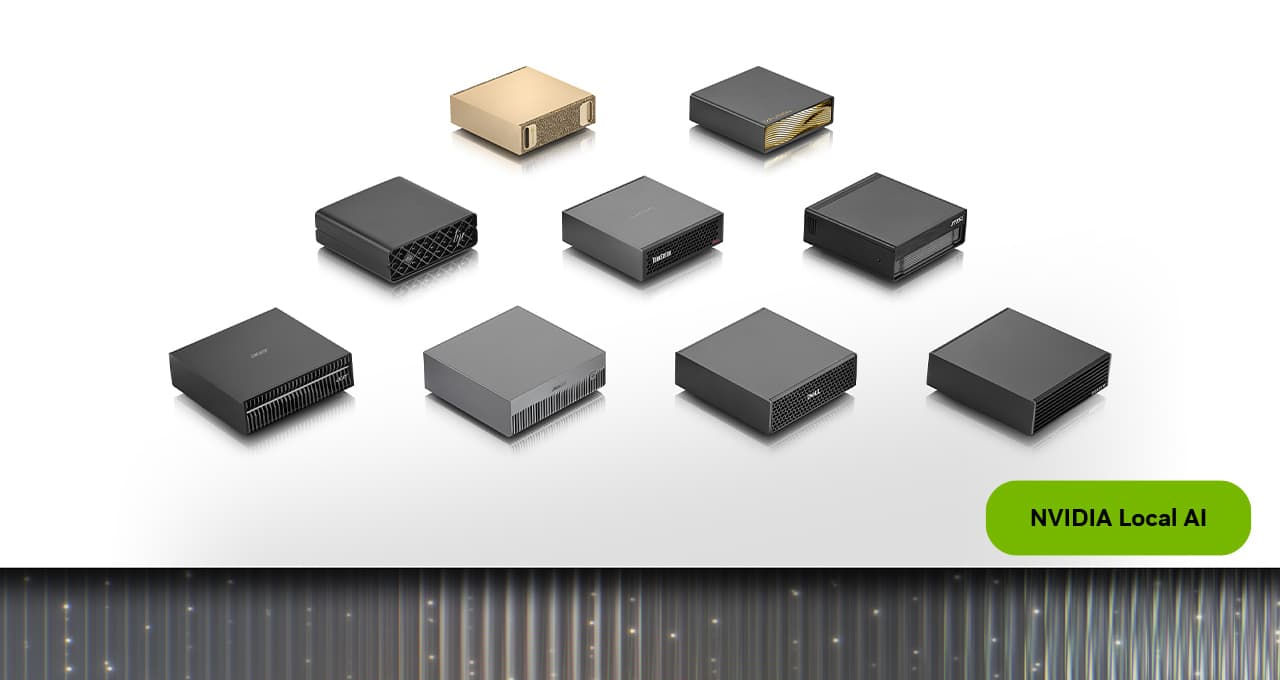
Nvidia announced on October 2, 2026 that a 64 GB unified memory version of its DGX Spark desktop AI system will go on sale this month,...
Nvidia promotes long-term chip value as supply chain stock gains attention
On October 2, 2026, Nvidia publicly highlighted the lasting value of its AI chips, characterizing the move as a victory lap over the durability of its...