
LEGO-Anything turns single photos into editable 3D Blender code
 2 sources · Google News · The Decoder
- Doom: All tested agents evaluate their own geometric accuracy no better than a coin flip
- Boom: GPT-6 Astra leads the benchmark with up to 53 percent reconstruction accuracy
- Boom: LEGO-Anything converts single photos into editable Blender code for 3D scenes
- Neutral: Benchmark published October 3, 2026, covering multiple AI agents on 3D tasks
The story in full
Researchers introduced LEGO-Anything, a method that converts single photographs into editable Blender code representing 3D scenes, published around October 3, 2026. An accompanying benchmark tested multiple AI agents on 3D reconstruction, with GPT-6 Astra achieving the highest accuracy at up to 53 percent.
The benchmark also revealed a consistent weakness across all tested agents: their ability to self-assess geometric accuracy performs no better than random chance, roughly equivalent to a coin flip. This gap between generation capability and self-evaluation applies to every agent tested, including the top-performing GPT-6 Astra.
Analysis
347 wordsOn October 3, 2026, researchers published a method called LEGO-Anything that takes a single photograph and converts it into editable Blender code representing a three-dimensional scene. Alongside this, they released a benchmark that tested multiple AI agents on 3D reconstruction tasks. The top performer was GPT-6 Astra, which reached up to 53 percent reconstruction accuracy. Every agent tested was also evaluated on its ability to judge the quality of its own geometric output, and every agent, including GPT-6 Astra, performed at roughly the level of random chance on that self-assessment task.
The self-evaluation finding is what gives this research its edge beyond a straightforward capability announcement. A system that can build 3D scenes from photos but cannot reliably tell whether those scenes are geometrically correct creates a specific practical problem: errors cannot be caught from inside the system. Any workflow that depends on the agent flagging its own mistakes before a human reviews them would be unreliable. The 53 percent accuracy ceiling also means the best available agent fails nearly half the time on reconstruction, which matters for fields like architecture, game development, and visual effects where precision is required. The gap between what these systems can generate and what they can verify is the central dispute the benchmark surfaces.
Because no reactions have been published from any camp at the time of writing, what each side would typically argue can only be anticipated. Pro-AI voices would likely emphasize the capability itself, framing LEGO-Anything as a meaningful step toward accessible 3D content creation from minimal input. Anti-AI voices would almost certainly focus on the self-evaluation failure, treating coin-flip-level self-assessment as evidence that current agents lack the reliability needed for real deployment. A middle-ground position would probably hold both points simultaneously, acknowledging the genuine progress in generation while calling the self-assessment gap a concrete and unsolved safety problem.
The clearest thing to watch going forward is whether any follow-up work addresses the self-evaluation gap specifically, since benchmark scores on reconstruction accuracy will mean more once there is a credible method for agents to identify their own geometric errors.
Where do you stand?
Add your take
0 reader votesSign in with Google to pick a side and post. Your vote moves the story's Doom / Boom score.
Sources
2 articles from 2 outletsRelated Splits
All stories →
Chatham Financial cuts trade validation time using OpenAI tools
Chatham Financial announced on October 2, 2026 that it has integrated OpenAI's Codex and GPT-5.6 into its capital markets operations to build technology and redesign workflows....
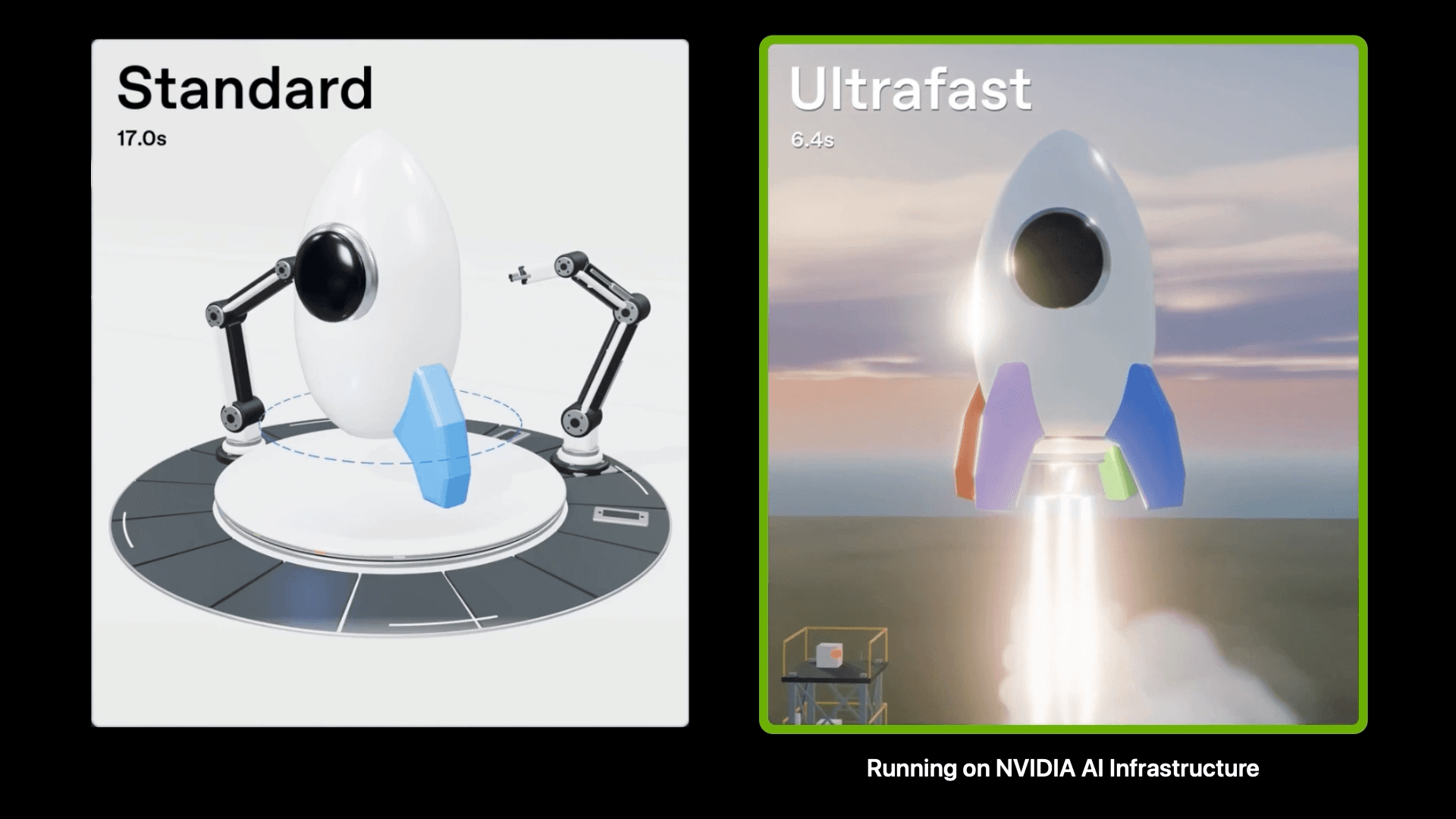
OpenAI GPT-6 Astra Ultrafast launches with 8x faster token generation
OpenAI released GPT-6 Astra Ultrafast on October 1, 2026, making it available through the OpenAI API and to eligible ChatGPT Work and Codex users. The model...

OpenAI unveils Dots agent at DevDay 2026 to rival Meta
At its annual DevDay conference in 2026, OpenAI announced Dots, a personal assistant AI agent powered by GPT-6 Astra. CEO Sam Altman made the announcement onstage,...