
GPT-6 Astra Ultrafast launches with 8x faster token generation
 2 sources · NVIDIA Blog
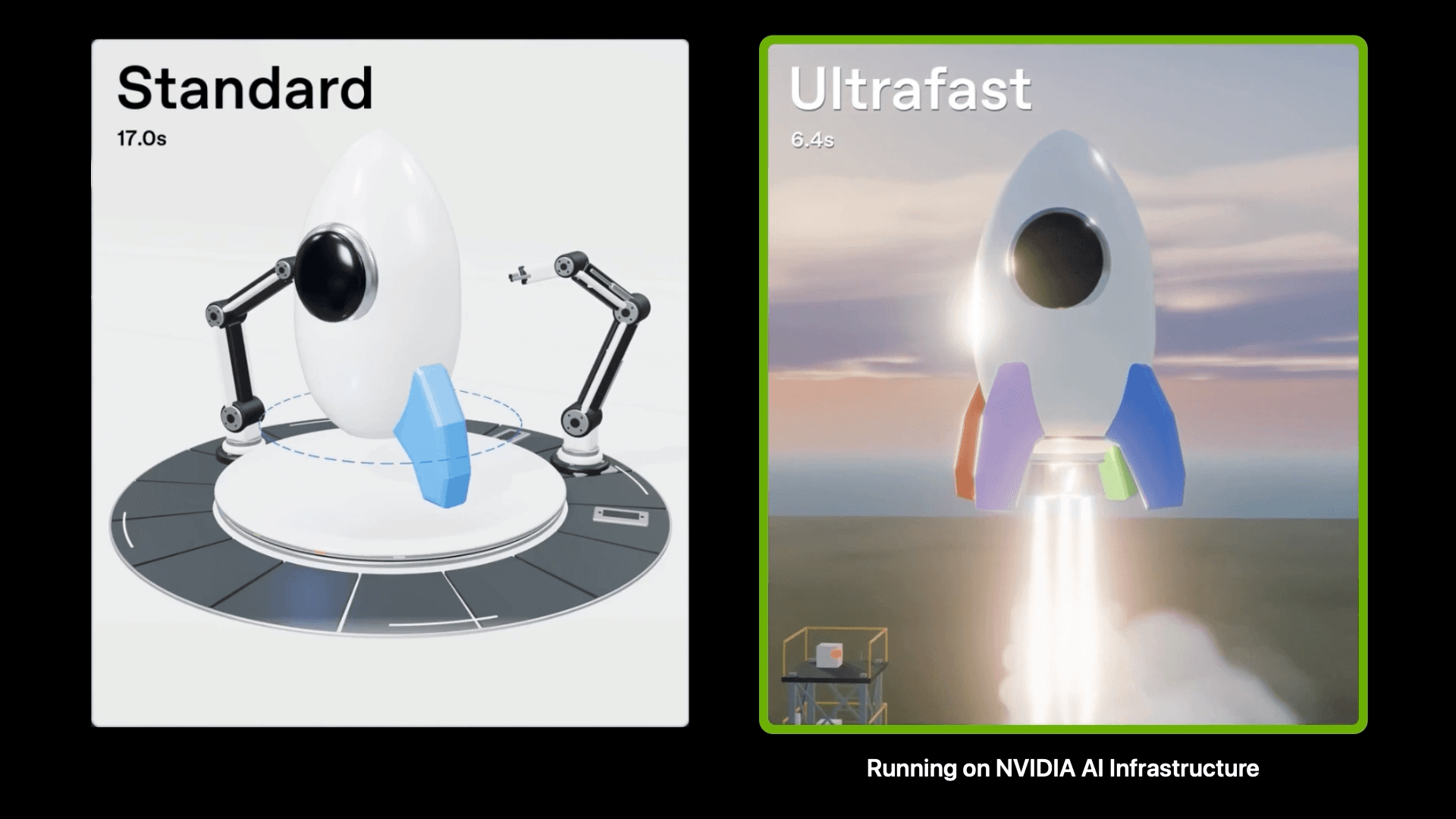
- Boom: GPT-6 Astra Ultrafast delivers up to 8x faster token generation than Astra Standard mode
- Boom: The mode is now live in the OpenAI API and for eligible ChatGPT Work and Codex users
- Boom: Performance gains rely on NVIDIA Blackwell GPU architecture and OpenAI inference optimizations
- Neutral: Announcement came from NVIDIA's blog, not OpenAI directly, on October 1, 2026
The story in full
OpenAI released GPT-6 Astra Ultrafast, a new inference mode available in the OpenAI API and to eligible ChatGPT Work and Codex users as of October 1, 2026. The mode runs on NVIDIA Blackwell GPUs and delivers up to 8x faster token generation compared to Astra Standard mode, according to NVIDIA.
The speed gain is attributed to inference optimizations built into OpenAI's models that exploit capabilities specific to the NVIDIA Blackwell architecture. The announcement was published by NVIDIA, positioning its Blackwell GPU line as central to the performance improvement.
Analysis
326 wordsOn October 1, 2026, NVIDIA published a blog post announcing that GPT-6 Astra Ultrafast is now live in the OpenAI API and available to eligible ChatGPT Work and Codex users. The mode runs on NVIDIA Blackwell GPUs and delivers up to 8x faster token generation compared to Astra Standard mode, a figure NVIDIA attributes to inference optimizations built into OpenAI's models that take advantage of capabilities specific to the Blackwell architecture. The announcement came from NVIDIA rather than OpenAI directly.
The detail worth noting is the source of the announcement. Hardware vendors do not typically lead product launches for AI model capabilities; that role usually falls to the model developer. NVIDIA framing this as a GPU story suggests the companies are jointly positioning Blackwell as a platform differentiator, not merely a component. The 8x figure is also notable because it is an upper bound, meaning real-world gains will vary by workload, prompt length and system configuration. Access is currently limited to eligible ChatGPT Work and Codex users, so the broader developer population does not yet have unrestricted entry.
No reactions from the Pro-AI, Anti-AI or Middle Ground camps have been published at this stage. The Pro-AI camp would typically treat an 8x throughput improvement as a meaningful step toward making large language models practical for latency-sensitive applications like real-time coding assistants and agentic workflows. The Anti-AI camp would likely raise questions about the energy costs of running Blackwell GPU clusters at scale and whether access restrictions entrench advantages for well-funded users. The Middle Ground camp would probably welcome the speed gains while pressing for independent benchmarks to verify the 8x claim under realistic conditions and for a clearer timeline on broader access.
The arguments most worth watching are whether OpenAI publishes its own technical documentation on Ultrafast with reproducible benchmarks, and whether access expands beyond the current eligible tier, both of which would clarify how significant the practical impact of this release turns out to be.
Where do you stand?
Add your take
0 reader votesSign in with Google to pick a side and post. Your vote moves the story's Doom / Boom score.
Sources
2 articles from 1 outletRelated Splits
All stories →
Developer releases Rhun, an assembly-written open-source code editor
A developer published Rhun, an open-source code editor for Linux, Windows, and Apple Silicon Macs, announced on Hacker News on October 1, 2026. The editor is...
Social club The Den uses ChatGPT Work to cut admin time
The Den, a social club, reported using ChatGPT Work to reduce the time spent preparing grant applications from three days to two hours, and liquor-license materials...

ChatGPT adds virtual clothes try-on using personal photos
OpenAI began rolling out new shopping features for ChatGPT on October 1, 2026, that allow users to virtually try on clothing and accessories by uploading their...