
Helm.ai announces $70M in signed contracts for foundation models
 1 source · The Robot Report
- Boom: Helm.ai signed $70M in commercial contracts for its physical-world foundation models
- Boom: Models were trained using Helm.ai's proprietary unsupervised "deep teaching" methodology
- Neutral: The $70M total reflects signed contracts, not funding or recognized revenue
The story in full
Helm.ai has reached $70 million in signed commercial contracts for its foundation models, according to a report published on October 8, 2026. The company developed its models using an unsupervised training method it calls "deep teaching," which it says is designed to learn the structure of the physical world.
Helm.ai operates in the robotics and autonomous systems space, where foundation models trained on physical-world data are sought by manufacturers and developers. The $70 million figure represents signed contracts, not revenue recognized or funding raised.
Analysis
353 wordsOn October 8, 2026, Helm.ai announced it had reached $70 million in signed commercial contracts for its foundation models. The company builds models aimed at robotics and autonomous systems, and says it trained them using a proprietary unsupervised method it calls "deep teaching," which is designed to learn the structure of the physical world rather than relying on labeled datasets. The $70 million figure is specifically described as signed contracts, a distinction the company appears to be making carefully, since it does not represent funding raised or revenue already recorded on the books.
The distinction between signed contracts and recognized revenue matters in a sector where commercial traction is hard to verify and hype cycles are common. Foundation models for physical-world applications, covering robotics, autonomous vehicles, and industrial automation, are an intensely competitive space, with large technology companies and well-funded startups all competing for the same manufacturer and developer relationships. Helm.ai's "deep teaching" approach, which sidesteps the need for large volumes of human-labeled data, is the core technical claim here, and whether that method produces models that genuinely outperform supervised alternatives at scale remains an open question in the field.
None of the three camps have published reactions to this story yet. Pro-AI voices would typically treat a $70 million contract milestone as evidence that physical-world AI is moving from research into genuine commercial deployment, and would likely highlight the unsupervised training angle as a sign that the field is finding ways around the bottleneck of expensive data labeling. Anti-AI voices would generally push back on the gap between signed contracts and delivered results, questioning whether foundation models can truly generalize across the unpredictable complexity of physical environments. Middle-ground observers would most likely focus on the contract-versus-revenue distinction, treating $70 million in signatures as a promising but unproven indicator until those contracts convert into completed work.
The argument will sharpen as Helm.ai reports on contract fulfillment, discloses which manufacturers or sectors are signing, or publishes independent benchmarks comparing "deep teaching" models against supervised competitors. Any public deployment by a named customer would be the clearest signal of whether the commercial momentum is real.
Where do you stand?
Add your take
0 reader votesSign in with Google to pick a side and post. Your vote moves the story's Doom / Boom score.
Sources
1 article from 1 outletRelated Splits
All stories →
Boston Dynamics names former Amazon Alexa chief Rohit Prasad as CEO
Boston Dynamics appointed Rohit Prasad as its new Chief Executive Officer on October 6, 2026. Prasad previously served as Senior Vice President and head scientist for...
TwelveLabs releases Pegasus 1.6 with first-person video understanding
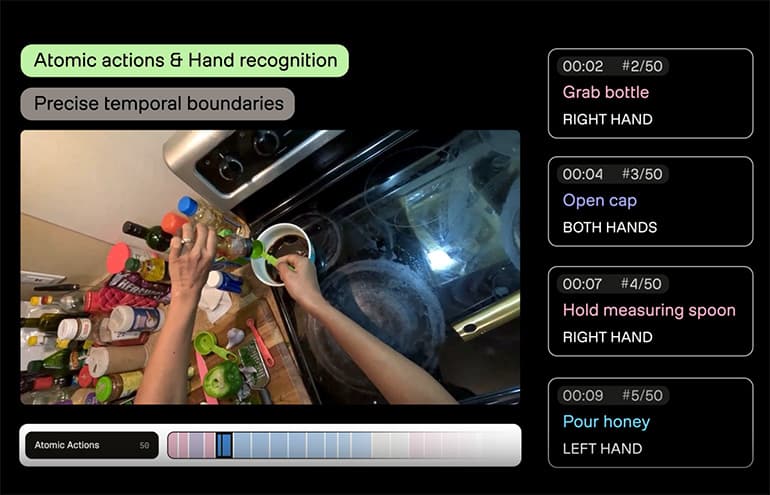
TwelveLabs released its Pegasus 1.6 model, announced on October 6, 2026, with capabilities focused on understanding first-person video for physical AI applications. The model is positioned...
Overview AI releases OV Spark line of AI inspection cameras
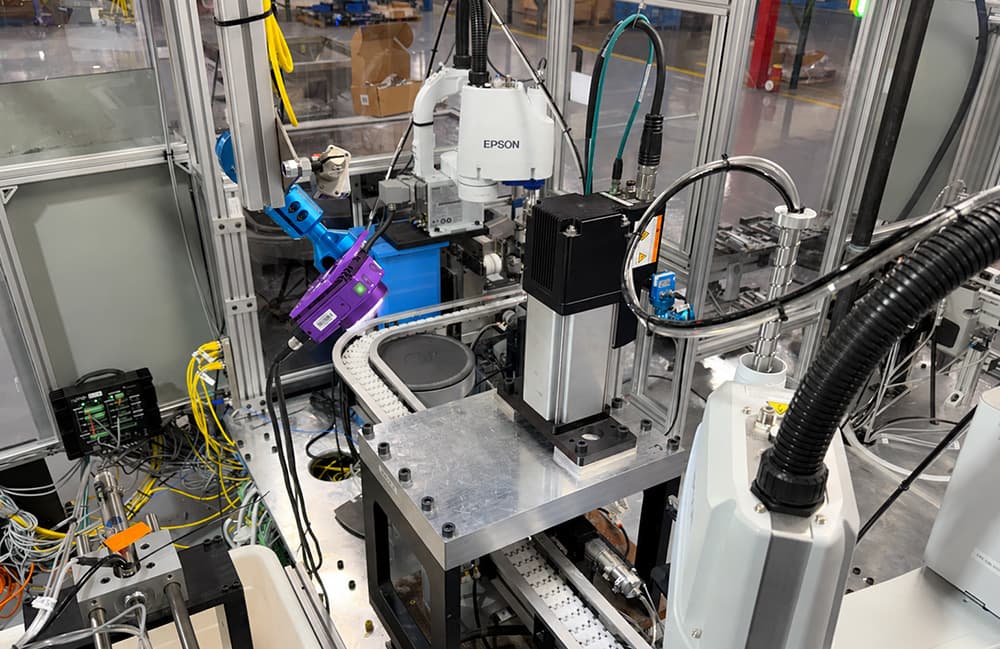
Overview AI launched the OV Spark and OV Spark Pro AI inspection cameras on or around October 6, 2026. The products are available through Overview AI...