
OpenAI launches Decisions API with image input for developers
 3 sources · The Decoder · GIGAZINE · Dealroom
- Boom: Decisions API processes text and images roughly ten times faster than OpenAI's Responses API
- Boom: Pricing is set at $0.10 per million input tokens for yes/no, category, or scale outputs
- Neutral: OpenAI cut its paid API tiers from five to three alongside the launch
- Boom: Image input support puts the API in direct competition with TypeSafe's Jev product
The story in full
OpenAI released a Decisions API on October 7, 2026, opening it to all developers. The API classifies text and images approximately ten times faster than the company's existing Responses API, returning yes/no probabilities, category picks, or scale ratings at a price of $0.10 per million input tokens. The release also includes image input support, positioning it against competitors such as TypeSafe's Jev.
Alongside the API launch, OpenAI reduced its paid API tiers from five to three. The Decisions API is designed to handle complex evaluations and simplify them into binary or categorical outputs, making it suited for classification tasks at scale.
Analysis
348 wordsOn October 7, 2026, OpenAI made its Decisions API available to all developers, pairing the launch with image input support and a significant price point of $0.10 per million input tokens. The API is built around structured outputs, returning yes/no probabilities, category selections, or scale ratings rather than open-ended text. OpenAI says it processes requests roughly ten times faster than its existing Responses API. Alongside the release, the company trimmed its paid API tiers from five to three, consolidating its developer-facing commercial structure.
The launch matters for a few reasons beyond the speed and pricing figures. Classification at scale is one of the more common and cost-sensitive tasks developers actually build with, covering everything from content moderation to document routing to automated decision pipelines. By bundling image input into the same structured-output framework, OpenAI is extending that capability beyond text, which puts it into more direct competition with TypeSafe's Jev product in a segment that has so far been less dominated by general-purpose language models. The tier reduction from five to three also signals a deliberate effort to simplify the developer experience, though whether that simplification benefits or constrains different classes of users is a genuine open question.
None of the three camps have published reactions to this story yet. The Pro-AI camp would typically highlight the speed and cost efficiency as evidence that capable AI tools are becoming more accessible to developers of all sizes. The Anti-AI camp would likely raise concerns about making automated classification systems, including image-based ones, faster and cheaper to deploy at scale, particularly where those systems inform real-world decisions about people. The Middle Ground camp would probably focus on the practical tradeoffs, welcoming the infrastructure improvements while calling for clear documentation of the error rates and limitations that come with reducing complex evaluations to binary or categorical outputs.
The most concrete things to watch are how developers report real-world accuracy compared to the speed claims, whether TypeSafe responds with updates to Jev, and how the revised three-tier pricing structure settles for teams that were previously on the tiers that no longer exist.
Where do you stand?
Add your take
0 reader votesSign in with Google to pick a side and post. Your vote moves the story's Doom / Boom score.
Sources
3 articles from 3 outlets- The DecoderOpenAI launches Decisions API that reduces complex evaluations to yes, no, or pick one
- GIGAZINEOpenAI has released a dedicated 'Decisions API' for decision-making, which can analyze text and images approximately 10 times faster and output probabilities and confidence levels.
- DealroomOpenAI opens Decisions API to all developers, adding image input in challenge to TypeSafe's Jev
Related Splits
All stories →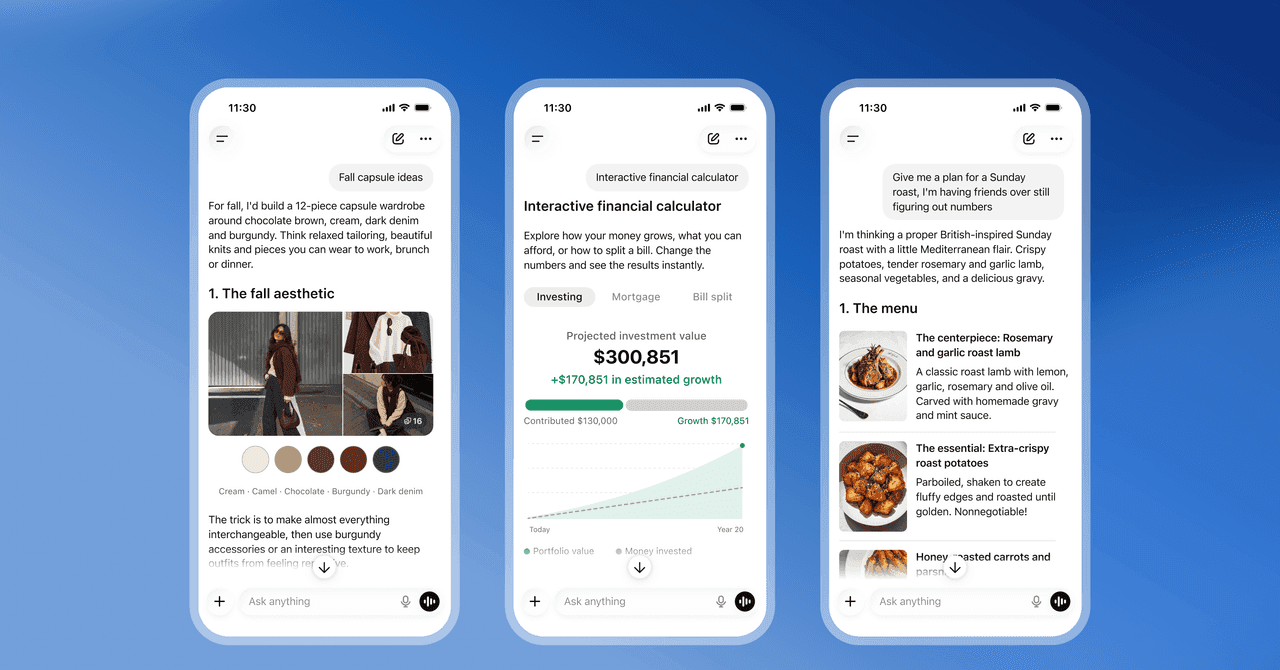
OpenAI rolls out visual interactive interface for all ChatGPT users
On October 7, 2026, OpenAI launched what it calls an "Intelligent UI" for ChatGPT, rolling it out to all users. The update changes how ChatGPT presents...
Radisson Hotel Group adds hotel booking capability to ChatGPT
Radisson Hotel Group launched a ChatGPT plugin on October 7, 2026, built in partnership with Accenture using OpenAI technology. The plugin allows travelers to find, compare,...
OpenAI reports teens average under 15 minutes daily on ChatGPT
OpenAI stated on October 7, 2026, that teenage users spend fewer than 15 minutes per day on ChatGPT. The disclosure comes as concerns about risks to...