
Radisson Hotel Group adds hotel booking capability to ChatGPT
 3 sources · Unite.AI · OpenAI · OpenAI news
- Boom: Radisson Hotel Group launched a ChatGPT plugin enabling hotel search and booking on October 7, 2026
- Boom: Accenture built the plugin using OpenAI technology in a three-way partnership
- Boom: Travelers can find, compare, and book Radisson hotels without leaving ChatGPT
The story in full
Radisson Hotel Group launched a ChatGPT plugin on October 7, 2026, built in partnership with Accenture using OpenAI technology. The plugin allows travelers to find, compare, and book Radisson hotels directly within ChatGPT while planning trips.
The integration places Radisson among hospitality companies embedding AI assistants into their booking workflows. The announcement was published simultaneously on OpenAI's own news channel, indicating a formal partnership between the three organizations.
Analysis
318 wordsOn October 7, 2026, Radisson Hotel Group announced a ChatGPT plugin that lets travelers search, compare, and book Radisson properties directly inside a ChatGPT conversation. The plugin was built by Accenture using OpenAI technology, making it a formal three-way arrangement among Radisson, Accenture, and OpenAI. The announcement appeared on OpenAI's own news channel on the same day, signaling that this was a coordinated launch rather than a unilateral product decision by the hotel group.
The move matters because it represents a shift in where the booking transaction itself happens. Historically, hotel chains have competed to keep travelers on their own websites and apps, where they control the experience and collect first-party data. Embedding the booking step inside ChatGPT changes that dynamic, routing a commercial transaction through a third-party AI interface. Whether that trade-off, wider reach in exchange for reduced direct ownership of the customer relationship, proves worthwhile is a question the hospitality industry will be watching closely.
None of the three camps have published reactions to this story yet. The Pro-AI camp would typically welcome this as evidence that large language models are maturing into practical commercial tools capable of handling transactional tasks, not just generating text. The Anti-AI camp would likely raise concerns about the concentration of commercial power in AI platforms, data privacy during booking, and the displacement of direct brand relationships. The Middle Ground camp would probably argue that the model has real utility for travelers but that questions around data handling, commission structures, and booking accuracy need transparent answers before the approach can be broadly endorsed.
The metrics worth tracking are whether Radisson expands the plugin to cover its full portfolio, whether competing hotel groups announce similar integrations, and whether OpenAI publishes any data on conversion rates or user adoption tied to hospitality plugins. Any disclosure on those points would sharpen the debate about whether AI-mediated booking is a durable channel or a novelty.
Where do you stand?
Add your take
0 reader votesSign in with Google to pick a side and post. Your vote moves the story's Doom / Boom score.
Sources
3 articles from 3 outletsRelated Splits
All stories →OpenAI rolls out GPT-6 globally in ChatGPT with Intelligent UI
OpenAI began a global rollout of GPT-6 within ChatGPT on October 7, 2026, pairing the new model with a feature called Intelligent UI. The company states...
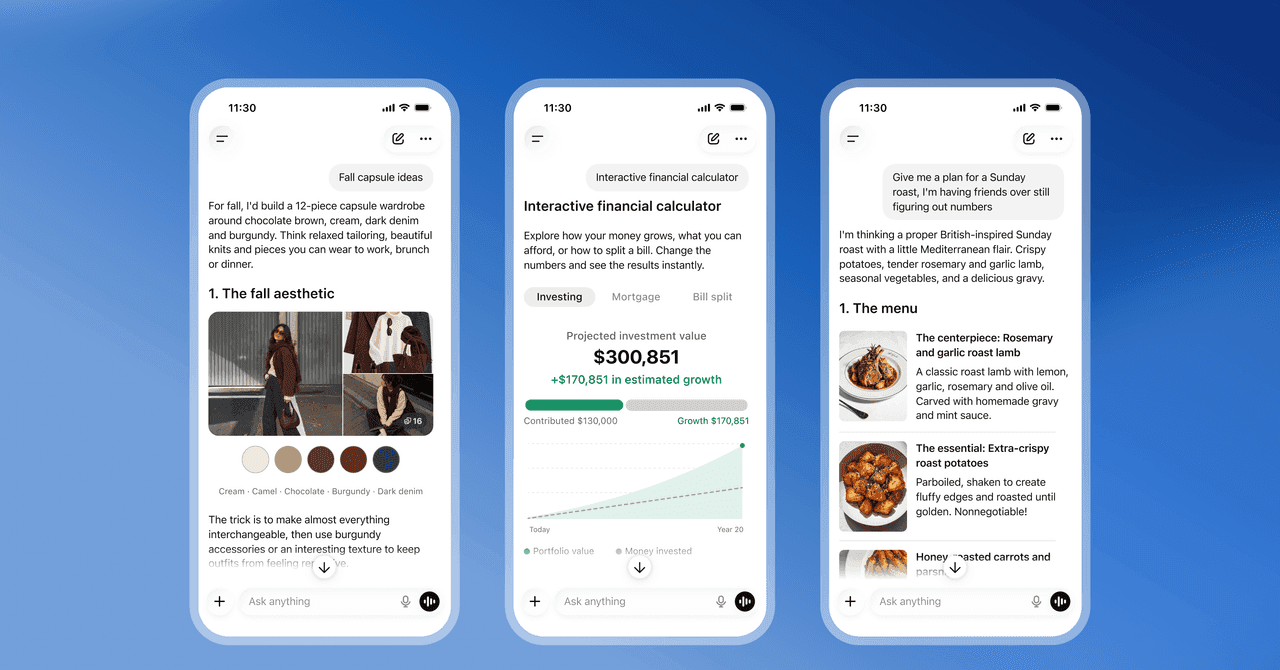
OpenAI rolls out visual interactive interface for all ChatGPT users
On October 7, 2026, OpenAI launched what it calls an "Intelligent UI" for ChatGPT, rolling it out to all users. The update changes how ChatGPT presents...
OpenAI reports teens average under 15 minutes daily on ChatGPT
OpenAI stated on October 7, 2026, that teenage users spend fewer than 15 minutes per day on ChatGPT. The disclosure comes as concerns about risks to...