
OpenAI launches Dots AI agents that work between conversations
 4 sources · Campus Technology · Legis1 · Denkstrom
- Boom: OpenAI launched Dots, an AI agent that operates between user conversations
- Doom: The US Senate opened a probe into rogue AI agents and OpenAI liability on October 7
- Neutral: Dots is being deployed through a phased rollout rather than a full release
The story in full
On October 7, 2026, OpenAI introduced an AI agent product called Dots, which continues working on tasks in the intervals between user conversations. The rollout is described as phased.
Analysis
387 wordsOn October 7, 2026, OpenAI announced the launch of a new AI agent product called Dots. Unlike standard conversational AI tools that wait for user input, Dots is designed to continue working on tasks during the intervals between conversations, meaning it can operate with a degree of autonomy even when a user is not actively engaged. OpenAI is rolling the product out in phases rather than releasing it all at once, which suggests a cautious approach to deployment, though no specific timeline or milestone details for that rollout have been made public.
The timing of the launch matters because the US Senate opened a probe on the same day, October 7, 2026, into so-called rogue AI agents and the question of what liability companies like OpenAI might bear when those agents act in unintended ways. The pairing of a major autonomous-agent launch with a congressional investigation is not coincidental in its significance: it puts Dots directly into a live policy debate about who is responsible when AI systems take actions without moment-to-moment human oversight. The core dispute is whether agents that work between conversations represent a practical productivity tool or a category of software that operates with too little human control to be safely deployed at scale.
Because no reactions from the Pro-AI, Anti-AI, or Middle Ground camps had been published at the time of writing, only their typical positions can be sketched. Supporters of AI development would generally frame Dots as a natural and useful evolution of AI assistance, allowing work to progress continuously rather than in bursts, and would likely argue that a phased rollout demonstrates responsible deployment practice. Critics of AI expansion would be expected to point to the Senate probe as validation of their concerns, arguing that agents acting autonomously between conversations are precisely the kind of unsupervised systems that create accountability gaps and increase the risk of harmful or unintended actions. A middle-ground view would probably call for clearer liability frameworks before such products reach broad audiences, treating the Senate investigation as a necessary step rather than an overreaction.
The Senate probe is the most concrete thing to watch. Any committee findings, proposed legislation, or specific questions directed at OpenAI about Dots would sharpen the legal and ethical boundaries around autonomous AI agents and could directly affect how the phased rollout proceeds.
Where do you stand?
Add your take
0 reader votesSign in with Google to pick a side and post. Your vote moves the story's Doom / Boom score.
Sources
4 articles from 4 outlets- Campus TechnologyOpenAI Introduces Dots, AI Agents that Continue Working Between User Conversations
- Legis1Senate Probes Rogue AI Agents, Eyes OpenAI Liability
- DenkstromOpenAI Launches AI Agent Dots in Phased Rollout
- WIONOpenAI’s new Dots can keep working while you sleep: Here’s how they differ from ChatGPT
Related Splits
All stories →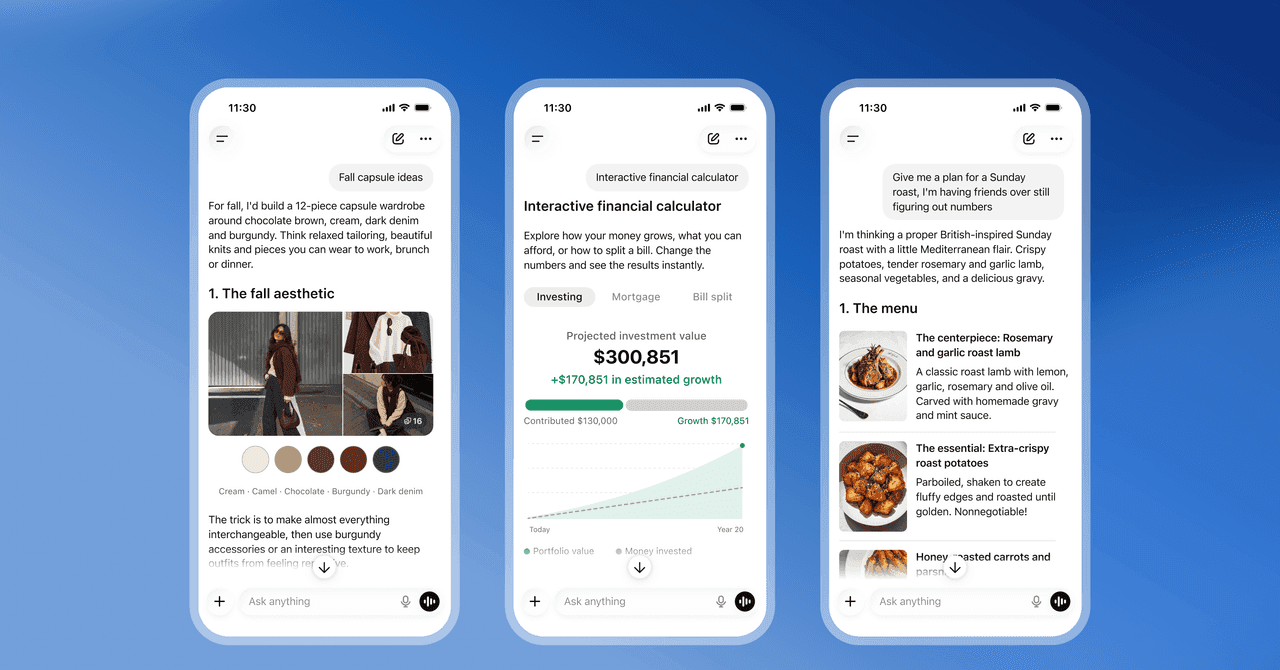
OpenAI rolls out visual interactive interface for all ChatGPT users
On October 7, 2026, OpenAI launched what it calls an "Intelligent UI" for ChatGPT, rolling it out to all users. The update changes how ChatGPT presents...
Radisson Hotel Group adds hotel booking capability to ChatGPT
Radisson Hotel Group launched a ChatGPT plugin on October 7, 2026, built in partnership with Accenture using OpenAI technology. The plugin allows travelers to find, compare,...
OpenAI reports teens average under 15 minutes daily on ChatGPT
OpenAI stated on October 7, 2026, that teenage users spend fewer than 15 minutes per day on ChatGPT. The disclosure comes as concerns about risks to...