
Nonprofit calls teen ChatGPT access unacceptable risk as OpenAI pushes back
 7 sources · New York Post · WSJ · whbl.com
- Doom: A US nonprofit called teen access to ChatGPT an unacceptable risk on October 7, 2026
- Doom: The nonprofit urged OpenAI to remove teenagers from ChatGPT entirely
- Neutral: OpenAI stated teens use ChatGPT for under 15 minutes per day on average
- Boom: OpenAI framed low daily usage as evidence against the severity of the risk claims
The story in full
On October 7, 2026, a US nonprofit urged OpenAI to remove teenagers from ChatGPT, characterizing the risk to that age group as unacceptable. OpenAI responded by stating that teens use ChatGPT for under 15 minutes a day on average.
The dispute pits the nonprofit's safety concerns about teen exposure to the chatbot against OpenAI's position that usage levels are modest. The specific nonprofit was not named in the available headlines, and the precise nature of the alleged risks it cited was not detailed in the sources.
Analysis
442 wordsOn October 7, 2026, a US nonprofit identified in several sources as Common Sense Media called teen access to ChatGPT an unacceptable risk and urged OpenAI to remove teenagers from the platform entirely. OpenAI responded the same day by releasing a usage figure: teenagers spend under 15 minutes a day on ChatGPT on average. The company framed that number as evidence that concerns about teen exposure were disproportionate to actual behavior. The Wall Street Journal and Reuters both carried the story, with Reuters and several affiliated outlets leading on OpenAI's usage statistic as the main counterpoint to the nonprofit's demands.
The dispute sits inside a broader argument about whether AI companies can responsibly self-regulate when minors are involved. Common Sense Media's objection is not simply about screen time; reports surfacing in the same news cycle alleged that ChatGPT's teen safeguards failed to notify parents during conversations involving suicide, pointing to a specific, concrete safety gap. That kind of allegation shifts the debate from vague developmental worries to questions about whether OpenAI's existing protections are technically adequate. Whether 15 minutes a day is a reassuring figure or an irrelevant one depends entirely on what happens during those minutes, which is the core of what is genuinely in dispute.
The anti-AI camp, represented here by advocacy voices and the Los Angeles Times reporting on the safeguard failures, argues that the platform carries structural risks for teenagers regardless of average session length. The account Pure Tech named Common Sense Media directly as the source of the unacceptable risk finding. Noah Weinberger, writing on Bluesky, was more skeptical of the advocacy side, describing OpenAI's response as safety theater while also dismissing some of the pressure as driven by prominent child-safety figures in a way he characterized as moral panic. The pro-AI camp had not published reactions as of the sources available, though a camp with that orientation would typically argue that modest usage figures and existing parental controls are sufficient grounds to keep the platform available to teens rather than restricting it. The middle ground, captured by Dan Hon's comment that the usage figure is both reassuring and potentially still significant, reflects genuine uncertainty about how to weigh a small daily average against harms that may not scale linearly with time.
The argument is unlikely to settle without independent review of the specific incidents in which parental alerts reportedly failed, or without regulatory action that would impose external standards on how AI companies handle minors. Any public report from Common Sense Media detailing its methodology, or any formal response from OpenAI addressing the suicide conversation allegations specifically, would give both camps harder ground to stand on.
What Anti-AI voices are sayingAdvocacy groups and researchers find ChatGPT poses unacceptable risks to teens, citing failures to alert parents during suicide conversations and broader safety gaps. A minority view dismisses the concern as moral panic driven by prominent child-safety advocates.
Quote 1 of 5What Middle Ground voices are sayingThe low daily usage figure is seen as both reassuring and still potentially significant for teen wellbeing.
Top quoteAdd your take
0 reader votesSign in with Google to pick a side and post. Your vote moves the story's Doom / Boom score.
No more Pro-AI reactions
More Anti-AI reactions (4)
“openai.com/index/teens-... Outstanding safety theater from OpenAI it’s truly superb. The wine moms and Jonathan Haidt are WINNING”
Noah Weinberger, Bluesky, skeptic · 17:03 UTC“ChatGPT para adolescentes classificado como "risco inaceitável" por falhas de segurança, de acordo com a organização sem fins lucrativos Common Sense Media.”
TugaTech, Bluesky · 12:28 UTC“ChatGPT for Teens is an ‘unacceptable risk,’ says Common Sense Media #Technology https://www.theverge.com/ai-artificial-intelligence/1006355/openai-chatgpt-for-teens-common-sense-media”
Pure Tech, Bluesky · 09:29 UTC“An advocacy group is urging OpenAI to prevent teenagers from using ChatGPT, arguing the chatbot is not safe for children.”
BizToc, Bluesky · 18:02 UTC
No more Middle Ground reactions
Sources
7 articles from 7 outlets- New York PostWatchdogs slam OpenAI’s claim that teens use ChatGPT less than 15 minutes per day
- WSJOpenAI’s ChatGPT for Teens Poses ‘Unacceptable Risk,’ Nonprofit Says
- whbl.comOpenAI says teens use ChatGPT for under 15 minutes a day as worries over risks grow
- WTVBOpenAI says teens use ChatGPT for under 15 minutes a day as worries over risks grow
- ReutersOpenAI says teens use ChatGPT for under 15 minutes a day as worries over risks grow
- Yahoo! Finance CanadaOpenAI says teens use ChatGPT for under 15 minutes a day as worries over risks grow
- The Economic TimesUS non-profit urges OpenAI to keep teens off ChatGPT: Report
Related Splits
All stories →OpenAI rolls out GPT-6 with interactive UI to all ChatGPT users
OpenAI began a global rollout of GPT-6 inside ChatGPT on October 7, 2026, alongside a feature called Intelligent UI. The update replaces primarily text-based responses with...
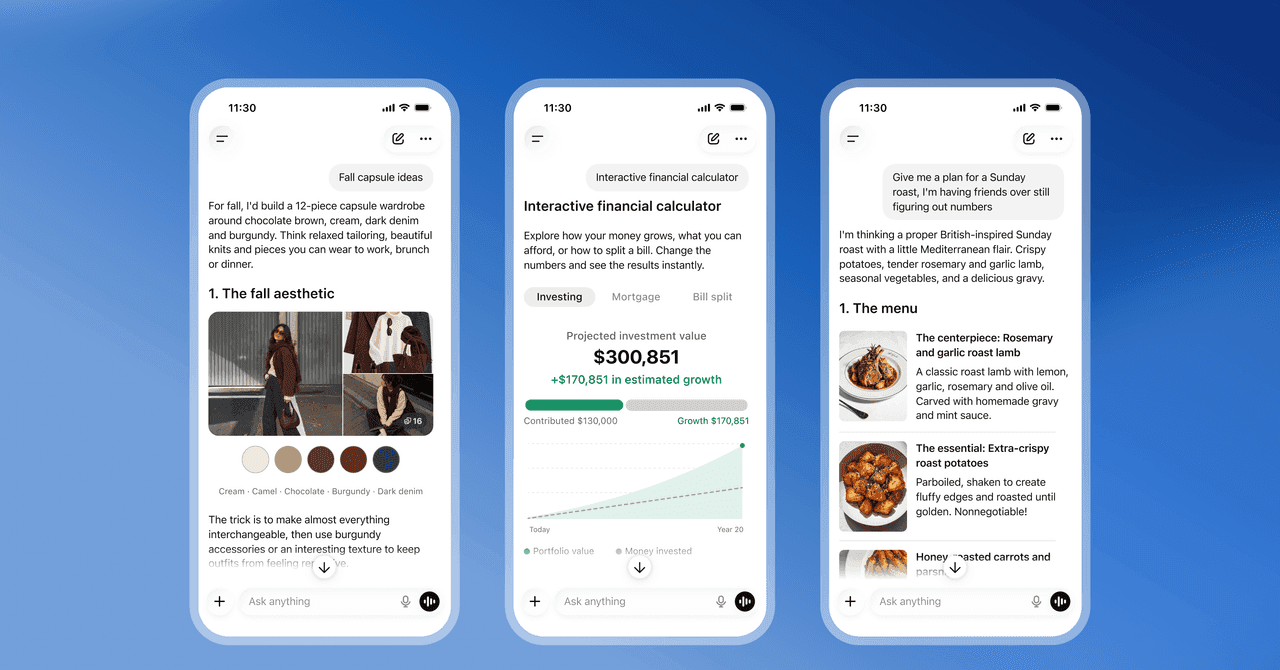
OpenAI rolls out visual interactive interface for all ChatGPT users
On October 7, 2026, OpenAI launched what it calls an "Intelligent UI" for ChatGPT, rolling it out to all users. The update changes how ChatGPT presents...
Meta launches Muse AI agent including an iPad app
Meta released an AI agent called Muse on October 7, 2026, with coverage noting the product arrived on iPad the same day. The Built In article...