
Innodata opens motion-capture lab for humanoid robot training data
 1 source · The Robot Report
- Boom: Innodata opened a motion-capture lab dedicated to humanoid robot movement training data
- Boom: The facility uses Vicon cameras to record movements at sub-millimeter accuracy
- Boom: Collected data is intended to help humanoid robots replicate human-like movement
The story in full
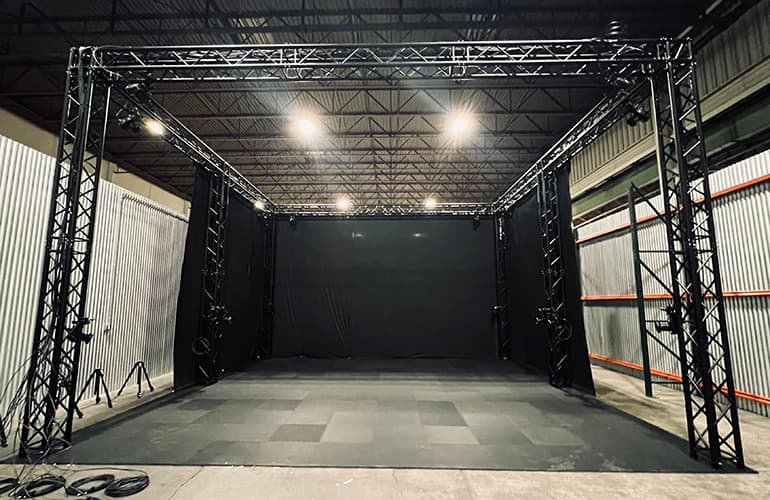
Innodata opened a motion-capture laboratory to collect movement training data for humanoid robots, using Vicon cameras capable of sub-millimeter measurement accuracy. The lab is designed to record real-world human movements that can be used to improve how humanoid robots move.
Analysis
351 wordsOn September 30, 2026, Innodata announced the opening of a motion-capture laboratory built specifically to generate movement training data for humanoid robots. The facility uses Vicon cameras, a professional-grade optical system capable of measuring motion at sub-millimeter accuracy, to record real-world human movements that can then be used to train robots to replicate those motions more naturally.
The move is notable because movement quality has been one of the persistent bottlenecks in humanoid robotics. Even robots that can navigate complex environments often move in ways that read as mechanical or unpredictable, which limits their usefulness in settings designed around human motion, such as warehouses, hospitals, or homes. By capturing high-fidelity human movement data at scale, Innodata is positioning itself as a supplier in a data pipeline that most robotics companies have had to build themselves or piece together from existing motion databases. The commercial question is whether third-party training data of this kind can meaningfully accelerate development across the industry, or whether leading robotics firms will continue to prefer proprietary data collection tied to their own hardware.
None of the three camps have published reactions to this story yet. The Pro-AI camp would typically frame a development like this as infrastructure progress, pointing to specialized data collection as the kind of foundational work that closes the gap between current robot capability and genuine human-level dexterity. The Anti-AI camp would be expected to raise concerns about the upstream role such facilities play in automating physical labor, arguing that better-moving robots accelerate displacement in jobs that have so far been insulated by the awkwardness of robotic motion. The Middle Ground camp would likely focus on the distinction between enabling technology and outcomes, noting that high-quality movement data could serve beneficial applications in rehabilitation or elder care as readily as it serves industrial automation.
The argument will sharpen as humanoid robot deployments scale. Announcements from robotics firms about whether they are licensing third-party motion data, and performance benchmarks comparing robots trained on different data sources, would give the clearest signal of whether facilities like Innodata's lab become a standard part of the development pipeline.
Where do you stand?
Add your take
0 reader votesSign in with Google to pick a side and post. Your vote moves the story's Doom / Boom score.
Sources
1 article from 1 outletRelated Splits
All stories →
ASI and SoftBank commit $225M to autonomous construction equipment
Autonomous Solutions Inc. (ASI) and SoftBank announced a partnership on September 30, 2026, committing $225 million to scale autonomous heavy equipment fleets across major infrastructure projects....

Flourish launches $3,555 Raspberry Pi humanoid robot for home use
Flourish announced the Flourish One, a humanoid home robot priced at $3,555, on September 29, 2026. The robot runs on Raspberry Pi hardware and is designed...
Nvidia launches Open Agent Safety Platform with 100-plus partners
On September 28, 2026, Nvidia launched the Open Agent Safety Platform, an open-source software framework designed to monitor and govern AI agents from testing through deployment....