
Third Moment Research runs 10,000 OpenAI agents for 36 hours
 2 sources · OpenAI · OpenAI news
- Boom: Third Moment Research runs 10,000 concurrent AI agents for over 36 hours
- Boom: Deployment uses four OpenAI models: GPT-6 Astra, GPT-6.1 Sol, Codex, and Daybreak
- Neutral: Daybreak is described as a cybersecurity-focused tool within the workflow
- Boom: Agents are described as improving in performance over the course of extended runs
The story in full
Third Moment Research, an AI lab, uses OpenAI models to run 10,000 simultaneous agents for sessions lasting more than 36 hours, according to a post published October 14, 2026. The deployment uses GPT-6 Astra, GPT-6.1 Sol, Codex, and Daybreak, a tool described as focused on cybersecurity.
The case study highlights sustained, large-scale agent operation and the use of multiple specialized models within a single research workflow. The agents are described as improving with use over the course of extended runs.
Analysis
353 wordsOn October 14, 2026, Third Moment Research published a case study describing how it runs 10,000 simultaneous AI agents for sessions lasting more than 36 hours. The deployment draws on four OpenAI models: GPT-6 Astra, GPT-6.1 Sol, Codex, and Daybreak, with Daybreak specifically oriented toward cybersecurity tasks. The case study also claims that agent performance improves over the course of these extended runs, suggesting the system is not simply maintaining a steady state but developing in some measurable way during operation.
The scale described here is notable on its own terms. Running 10,000 concurrent agents for over a day and a half represents a significant operational commitment, and the use of four distinct specialized models within a single workflow points toward a more modular, multi-model architecture than earlier agentic deployments typically required. The inclusion of a cybersecurity-focused tool, Daybreak, raises questions that the case study does not fully answer, including what kinds of cybersecurity tasks are being automated, at what level of autonomy, and with what oversight mechanisms in place. The claim that agents improve with use over extended sessions is also a point that invites scrutiny, since the nature and verification of that improvement are not detailed in the available material.
No published reactions from the Pro-AI, Anti-AI, or Middle Ground camps have appeared yet. Pro-AI voices would typically treat a deployment at this scale as evidence that agentic AI is maturing into a reliable research and operations tool, pointing to the sustained runtime and multi-model coordination as proof of concept. Anti-AI commentators would likely focus on the cybersecurity angle, arguing that autonomous agents operating at this scale in sensitive domains warrant much closer examination of risks and accountability structures. Middle Ground observers would probably call for transparency about what the agents are actually doing, how improvement is being measured, and what safeguards govern a system of this size.
The details most worth watching are any technical disclosures Third Moment Research or OpenAI release about how agent improvement is defined and measured across these sessions, and whether further information emerges about the specific scope and boundaries of Daybreak's role in the workflow.
Where do you stand?
Add your take
0 reader votesSign in with Google to pick a side and post. Your vote moves the story's Doom / Boom score.
Sources
2 articles from 2 outletsRelated Splits
All stories →Amp deploys OpenAI agents across tasks beyond coding
On October 14, 2026, OpenAI announced that Amp is using OpenAI models to run AI agents for tasks outside of code generation. The integration uses GPT-6...

Artemis Security launches Orion-1 cybersecurity model for defenders
Artemis Security released Orion-1, a model purpose-built for cyber defense, as reported by The Decoder on October 14, 2026. The company claims Orion-1 outperforms Claude Opus...
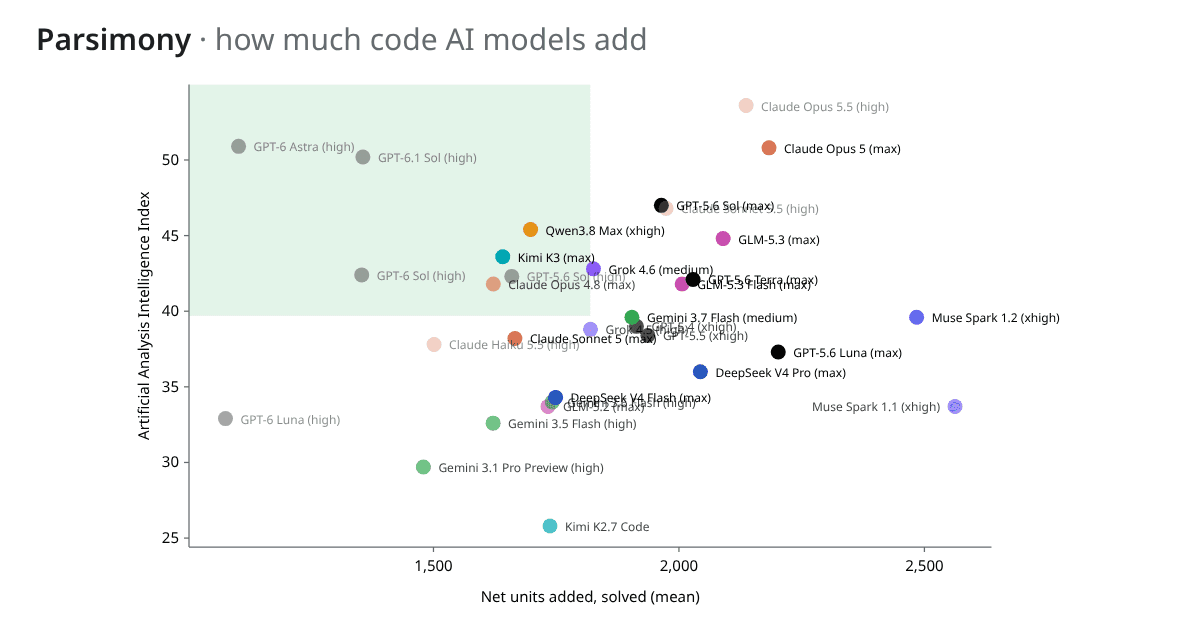
Open-source benchmark grades AI models on code they add
A developer released Parsimony, an open-source benchmark tool, on October 13, 2026, designed to measure how much excess code AI models produce when solving programming tasks....