
Artemis Security launches Orion-1 cybersecurity model for defenders
 1 source · The Decoder
- Boom: Orion-1 claims benchmark wins over Claude Opus 5.5 and GPT-6 Sol on cyber tasks
- Doom: Frontier model guardrails are now blocking security defenders, not just malicious hackers
- Boom: Artemis Security built Orion-1 specifically to serve cyber defense professionals
- Neutral: The benchmark used to evaluate Orion-1 was created by Artemis Security itself
The story in full
Artemis Security released Orion-1, a model purpose-built for cyber defense, as reported by The Decoder on October 14, 2026. The company claims Orion-1 outperforms Claude Opus 5.5 and GPT-6 Sol on its own benchmark designed to evaluate cyber capabilities.
The release targets a gap created when general-purpose frontier AI models tightened restrictions on cyber-related outputs to prevent misuse by hackers. Those same restrictions have increasingly blocked legitimate security defenders from using the tools for offensive security research and penetration testing.
Analysis
357 wordsOn October 14, 2026, Artemis Security released Orion-1, a large language model built specifically for cyber defense work. The company claims Orion-1 outperforms both Claude Opus 5.5 and GPT-6 Sol on benchmark evaluations of cyber-related tasks. The benchmark used to reach that conclusion was designed and administered by Artemis Security itself, a detail that sits alongside the performance claims rather than validating them independently.
The release arrives in response to a concrete shift in how major AI labs handle security-related outputs. General-purpose frontier models have progressively tightened restrictions on content that could assist with hacking, but those same restrictions have caught legitimate security professionals in the net. Penetration testers, red teams, and offensive security researchers depend on the same technical knowledge that malicious actors would seek, and the guardrails increasingly fail to distinguish between the two. Orion-1 is Artemis Security's answer to that friction, positioning itself as a tool calibrated for defenders who have been squeezed out of mainstream AI tools. What remains genuinely in dispute is whether a purpose-built model released by a commercial vendor, evaluated on its own benchmark, actually solves the problem or simply reframes it. The question of how to verify that a model trained to assist defenders does not also lower the bar for attackers is unresolved.
None of the three camps have published reactions to this specific release. The Pro-AI camp would typically welcome Orion-1 as evidence that AI development can self-correct around real-world friction, producing specialized tools that serve professional needs without the blunt restrictions of general-purpose models. The Anti-AI camp would be expected to raise concern that loosening guardrails for one category of user creates a pathway that sophisticated bad actors could exploit by presenting themselves as defenders. The Middle Ground camp would likely focus on the benchmark credibility problem, arguing that independent evaluation and clearer deployment controls are prerequisites before treating Orion-1's claims as settled.
The most consequential thing to watch is whether independent security researchers or third-party evaluators test Orion-1 against the benchmarks Artemis Security has cited. A separate audit of both performance claims and misuse risk would either substantiate the company's positioning or complicate it significantly.
Where do you stand?
Add your take
0 reader votesSign in with Google to pick a side and post. Your vote moves the story's Doom / Boom score.
Sources
1 article from 1 outletRelated Splits
All stories →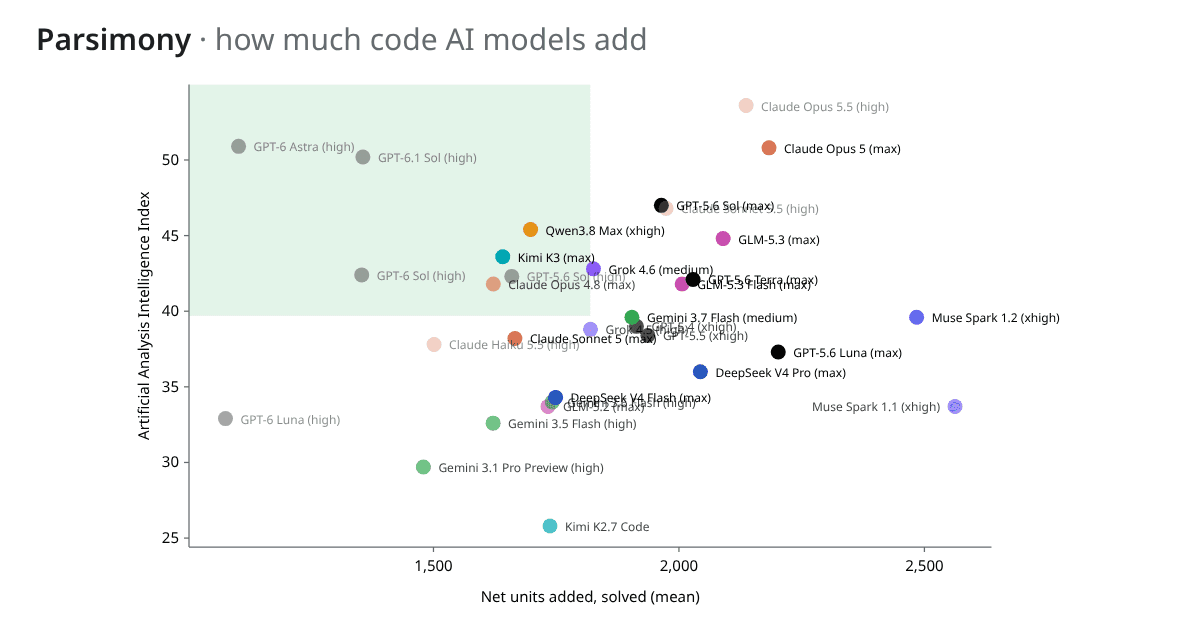
Open-source benchmark grades AI models on code they add
A developer released Parsimony, an open-source benchmark tool, on October 13, 2026, designed to measure how much excess code AI models produce when solving programming tasks....

Higgsfield extends AI video limit from one minute to ten
Higgsfield announced on October 13, 2026 that its AI video platform now supports clips longer than ten minutes, up from a previous one-minute limit. The update...

Google releases Gemini 4 Argon model on October 13
Google launched Gemini 4 Argon on October 13, 2026, making it available through the Gemini app and a platform called Antigravity. Access is limited to paying...