
Higgsfield extends AI video limit from one minute to ten
 3 sources · Blockchain News · OpenAI · OpenAI news
- Boom: Higgsfield raises its AI video length cap from one minute to over ten minutes
- Boom: GPT-Image-2.5 integration adds more precise visual generation to the platform
- Boom: GPT-Live feature opens a voice-driven path to filmmaking for creators
The story in full
Higgsfield announced on October 13, 2026 that its AI video platform now supports clips longer than ten minutes, up from a previous one-minute limit. The update also introduces GPT-Image-2.5 for more precise visuals and GPT-Live to support voice-driven filmmaking workflows.
Analysis
357 wordsOn October 13, 2026, Higgsfield announced a significant expansion to its AI video platform, raising the maximum clip length from one minute to over ten minutes. The update bundles in two additional capabilities: GPT-Image-2.5, which the company says delivers more precise visual generation, and GPT-Live, a feature designed to let creators direct and shape video through voice input rather than manual prompts or editing tools. The platform also draws on GPT-6 Astra as part of the underlying model stack powering longer-form output.
The jump from one minute to ten is not a marginal refinement. Short clip limits have been one of the most consistent practical complaints about AI video tools, making them useful for social snippets or proof-of-concept demos but difficult to apply to anything resembling a complete scene, advertisement, or short film. Extending that ceiling by a factor of ten shifts the conversation from novelty toward genuine production utility. The GPT-Live addition is also notable because voice-driven workflows could lower the barrier for creators who lack familiarity with prompt engineering or traditional editing software, though whether the output quality holds across longer durations remains an open question.
No reactions from the Pro-AI, Anti-AI, or Middle Ground camps had been published at the time of writing. Pro-AI commentators would typically frame an update like this as evidence that AI video is maturing fast enough to compete with conventional production pipelines, pointing to the combination of length, image precision, and voice control as a meaningful convergence. Anti-AI voices would likely raise concerns about the accelerating ease with which synthetic long-form video can now be produced, including implications for misinformation, displaced creative workers, and the erosion of audience trust in video as a medium. Middle Ground observers would probably acknowledge the practical gains for independent creators while pressing for transparency standards and clearer labeling of AI-generated content.
The clearest near-term test will be how creators and studios actually use the ten-minute ceiling in finished projects, and whether Higgsfield publishes quality benchmarks or independent reviewers assess coherence and consistency across full-length clips. Any formal response from platform distributors or regulators regarding AI-generated long-form video would also sharpen the debate considerably.
Where do you stand?
Add your take
0 reader votesSign in with Google to pick a side and post. Your vote moves the story's Doom / Boom score.
Sources
3 articles from 3 outletsRelated Splits
All stories →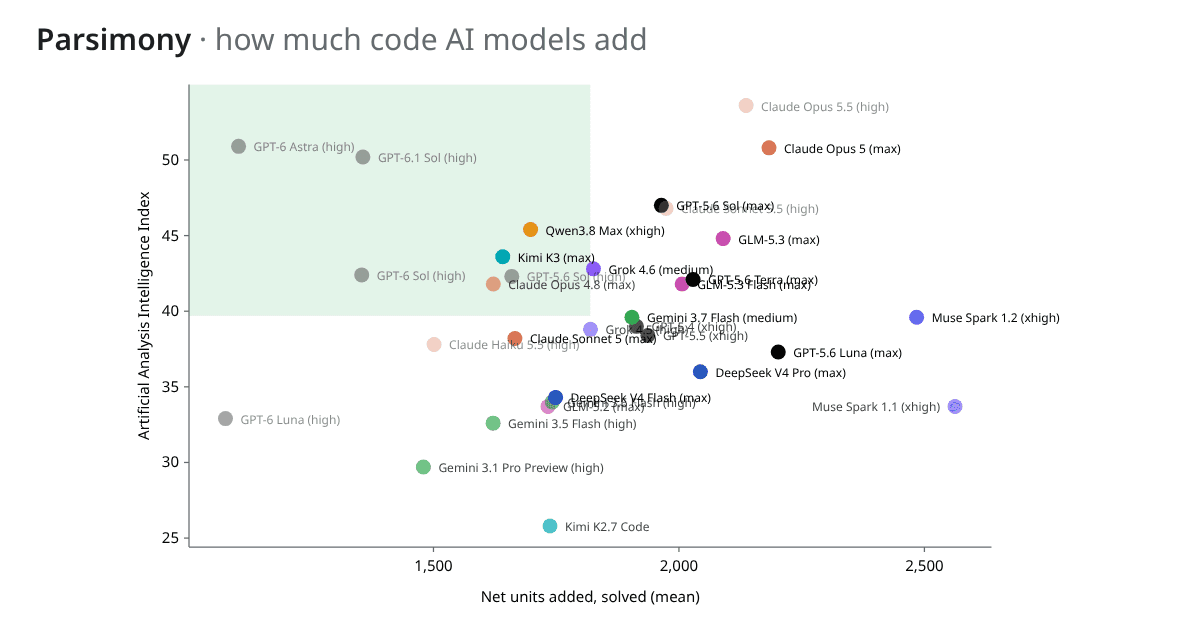
Open-source benchmark grades AI models on code they add
A developer released Parsimony, an open-source benchmark tool, on October 13, 2026, designed to measure how much excess code AI models produce when solving programming tasks....

Google releases Gemini 4 Argon model on October 13
Google launched Gemini 4 Argon on October 13, 2026, making it available through the Gemini app and a platform called Antigravity. Access is limited to paying...
Microsoft unveils AI model claimed to be 35 times faster than GPT-6 Sol
Microsoft has released a new AI model that the company claims runs 35 times faster than OpenAI's GPT-6 Sol, according to reporting published on October 13,...