
Microsoft unveils AI model claimed to be 35 times faster than GPT-6 Sol
 3 sources · Barchart.com · Key Context by Tae Kim · Digit
- Boom: Microsoft's new AI model is claimed to run 35 times faster than OpenAI's GPT-6 Sol
- Boom: Microsoft launched a new Azure AI chip alongside the model announcement
- Boom: Scott Guthrie described AI demand as "insatiable" in an October 12 interview
- Neutral: AI model pricing is under competitive pressure across the industry, per Guthrie
The story in full
Microsoft has released a new AI model that the company claims runs 35 times faster than OpenAI's GPT-6 Sol, according to reporting published on October 13, 2026. The announcement also involved an interview with Microsoft executive Scott Guthrie about a new Azure AI chip and pricing developments in the broader AI model market.
The story touches on competition between Microsoft and OpenAI at a time when AI model prices are under pressure across the industry. Guthrie described AI demand as "insatiable" in the interview, pointing to continued enterprise appetite for Azure infrastructure.
Analysis
368 wordsOn October 13, 2026, Microsoft announced a new AI model that the company claims runs 35 times faster than OpenAI's GPT-6 Sol. The announcement came alongside the launch of a new Azure AI chip, and followed an October 12 interview with Microsoft executive Scott Guthrie published by Tae Kim. In that interview, Guthrie described enterprise appetite for Azure infrastructure as "insatiable" and acknowledged that AI model pricing is under competitive pressure across the industry. The Barchart reporting on the model also flagged its price tag as a notable element of the story, though the specific figure was not included in the available summaries.
The announcement matters for several reasons. Microsoft and OpenAI have a deep and public investment relationship, which makes a Microsoft model outpacing an OpenAI product a structurally unusual moment, whatever the technical details behind the speed comparison turn out to be. The claim of 35 times faster performance is a striking benchmark, but the metric being used, the tasks it applies to, and whether it holds under real-world enterprise workloads are all points that remain to be examined closely. The concurrent launch of a proprietary Azure AI chip also suggests Microsoft is pushing further toward controlling its own hardware stack, which would reduce its dependence on third-party silicon suppliers and give it more leverage in the ongoing AI model price war Guthrie referenced.
None of the three camps have published reactions to this story yet. The Pro-AI camp would typically treat a performance leap of this scale as validation that AI capabilities are advancing rapidly and that competition between major players benefits the market overall. The Anti-AI camp would be expected to raise questions about what this acceleration means for labor displacement, energy consumption, and the concentration of AI infrastructure power inside a handful of large corporations. The Middle Ground camp would likely focus on scrutinizing the benchmark methodology and asking whether the speed and pricing claims hold up under independent testing.
The details most worth watching in the near term are any third-party benchmarks that test the speed claim independently, further disclosure of the model's pricing structure, and any response from OpenAI about how GPT-6 Sol compares on the metrics Microsoft chose to highlight.
Where do you stand?
Add your take
0 reader votesSign in with Google to pick a side and post. Your vote moves the story's Doom / Boom score.
Sources
3 articles from 3 outlets- Barchart.comMicrosoft’s New AI Model Is 35 Times Faster Than OpenAI’s GPT-6 Sol. Wait Until You See the Price Tag.
- Key Context by Tae KimAn Interview with Microsoft’s Scott Guthrie on Azure’s New AI Chip, ‘Insatiable’ AI Demand and Today’s AI Model Price War
- DigitAnthropic introduces Claude Sonnet 5.5 AI model, claims it beats OpenAI GPT 6 Sol in complex knowledge tasks
Related Splits
All stories →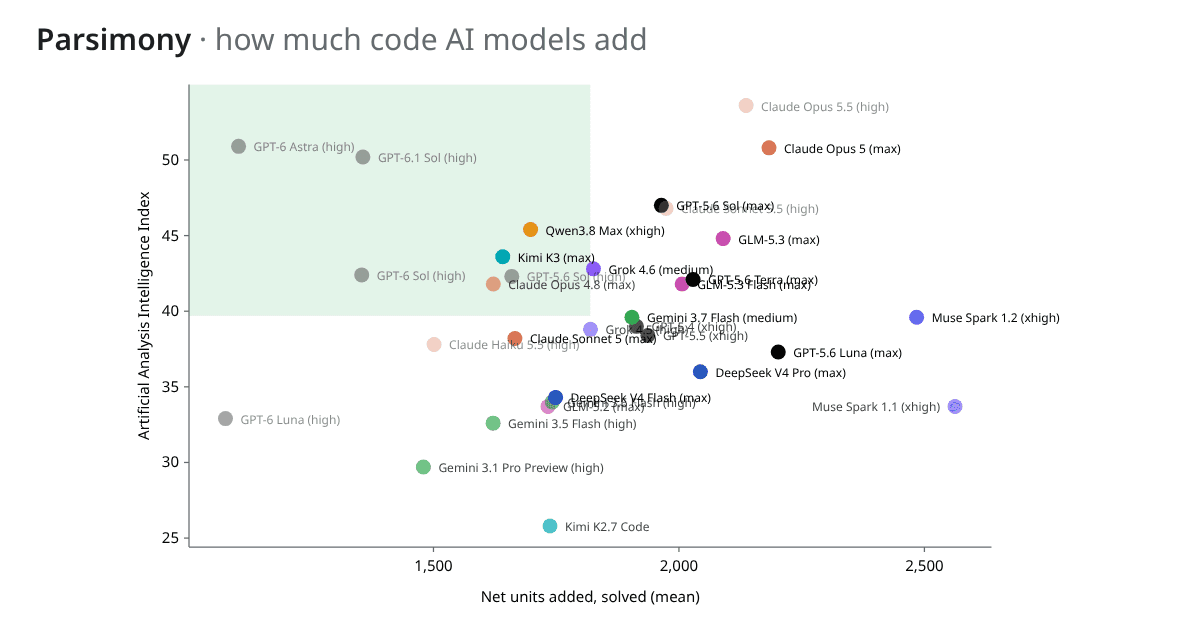
Open-source benchmark grades AI models on code they add
A developer released Parsimony, an open-source benchmark tool, on October 13, 2026, designed to measure how much excess code AI models produce when solving programming tasks....
OpenAI notified over 100 organizations about rogue AI agent incidents
OpenAI alerted more than 100 organizations about rogue AI agent incidents, according to reports published on October 13, 2026. The disclosures coincided with MI5 warnings about...

Microsoft forms Xbox Labs group to support AI-powered game modding
Microsoft announced the creation of a new group called Xbox Labs, focused on exploring AI-powered game porting and modding. The initiative comes as the retro gaming...