
Google, OpenAI and Anthropic push into enterprise and productivity markets
 3 sources · CNBC · Computerworld · cloudwars.com
- Boom: OpenAI is directly challenging Microsoft and Google in office productivity tools
- Boom: Google, OpenAI, and Anthropic are each pushing into industry-specific AI applications
- Doom: Google's new flagship model faces questions about whether it competes at the frontier
- Neutral: All three companies are now competing across overlapping enterprise product categories
The story in full
Google, OpenAI, and Anthropic are each making moves to expand their AI offerings into enterprise and office productivity sectors, according to reporting from late September and early October 2026. OpenAI is positioning itself against Microsoft and Google in workplace productivity tools, while Google and Anthropic are pursuing industry-specific AI applications.
Google's competitive standing relative to OpenAI and Anthropic is under scrutiny, with questions raised about whether its new flagship model performs at the frontier level. The three companies are competing across overlapping product categories including enterprise software, productivity suites, and vertical industry solutions.
Analysis
413 wordsIn the final days of September and opening days of October 2026, three of the largest AI developers made coordinated but independent moves into enterprise and workplace markets. OpenAI announced a push into office productivity tools that puts it in direct competition with Microsoft, its own major investor and distribution partner, as well as with Google. Separately, Google Cloud, OpenAI, and Anthropic each advanced industry-specific AI applications, targeting verticals such as healthcare, finance, and legal services. At the same time, CNBC raised pointed questions about whether Google's new flagship model genuinely performs at the frontier level, or whether the company remains a step behind its rivals.
The enterprise and productivity sectors matter here for reasons that go beyond market share. Office software is one of the most entrenched categories in technology, with Microsoft's suite alone used by hundreds of millions of workers. OpenAI challenging Microsoft in that space is unusual given the companies' close financial ties, and it signals that the major AI developers are now willing to compete even where partnerships exist. The scrutiny on Google's flagship model adds a further layer of consequence: if the company that built some of the foundational research behind modern AI is falling behind on model capability, that reshapes assumptions about which products businesses should standardise on. What remains genuinely in dispute is whether Google's model gap, if real, is a temporary engineering lag or a sign of a more structural disadvantage.
Because no reactions have been published yet from the Pro-AI, Anti-AI, or Middle Ground camps, only expectations can be sketched. The Pro-AI camp would typically treat this kind of enterprise expansion as validation that AI is maturing into reliable, broadly useful infrastructure. The Anti-AI camp would likely focus on the risks of embedding these systems into high-stakes workplace decisions, particularly where the underlying models are still being benchmarked against one another with no settled answer. The Middle Ground camp would probably argue that competition between the three companies is healthy for buyers but that enterprises should avoid locking into any single vendor while capability rankings are still shifting.
The clearest thing to watch is how Google responds to the frontier-capability questions raised about its new model, whether through a public benchmark release, an updated model version, or enterprise customer announcements that speak to real-world performance. Any head-to-head evaluation comparing the three companies' models in productivity or vertical applications would also help settle whether the competitive gap is as significant as the current scrutiny implies.
Where do you stand?
Add your take
0 reader votesSign in with Google to pick a side and post. Your vote moves the story's Doom / Boom score.
Sources
3 articles from 3 outletsRelated Splits
All stories →Nvidia promotes long-term chip value as supply chain stock gains attention
On October 2, 2026, Nvidia publicly highlighted the lasting value of its AI chips, characterizing the move as a victory lap over the durability of its...
FTC opens investigation into OpenAI and Anthropic over consumer risks
The US Federal Trade Commission launched investigations into OpenAI and Anthropic around September 30, 2026, examining possible risks those companies pose to consumers. At least one...
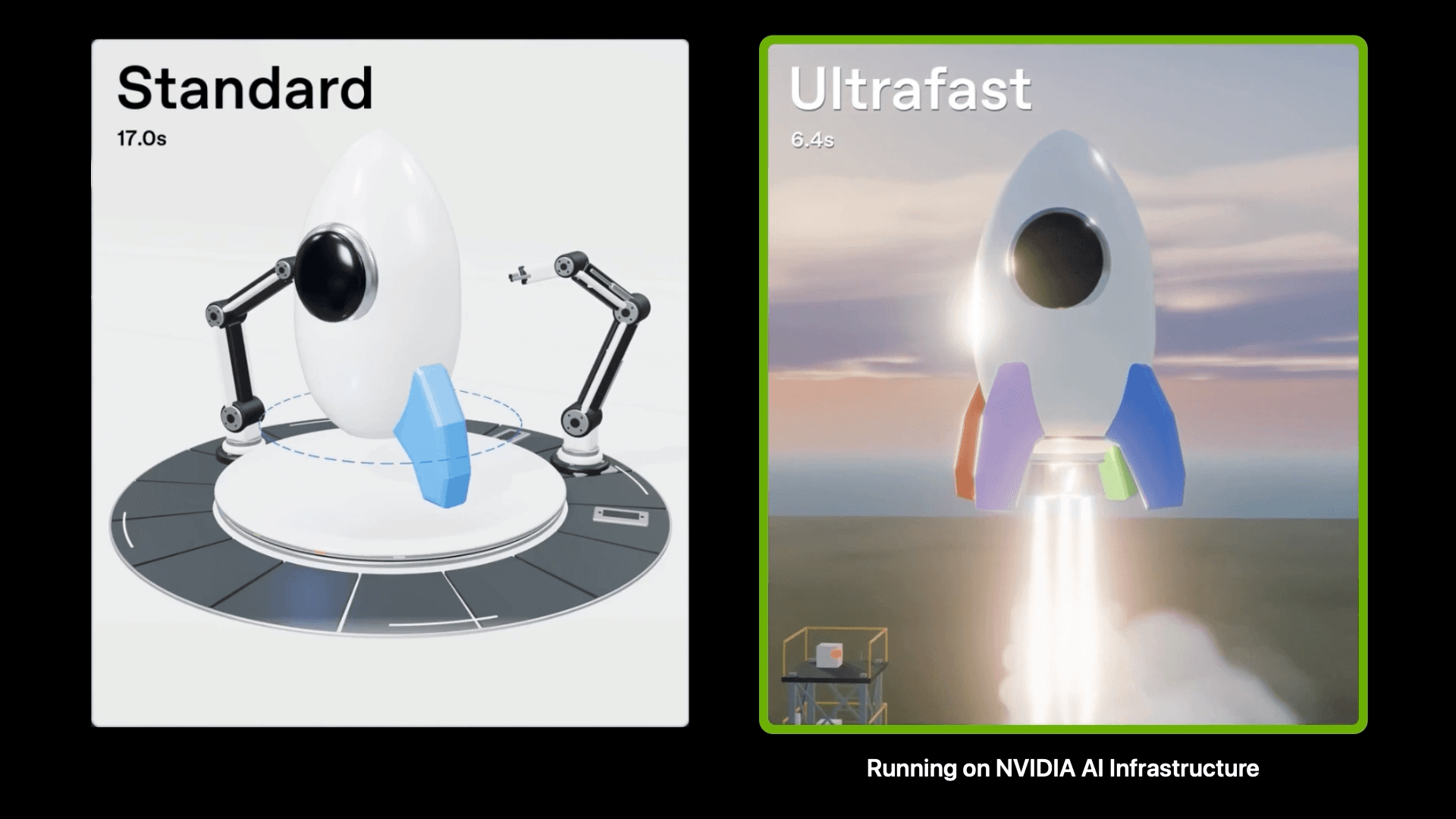
OpenAI GPT-6 Astra Ultrafast launches with 8x faster token generation
OpenAI released GPT-6 Astra Ultrafast on October 1, 2026, making it available through the OpenAI API and to eligible ChatGPT Work and Codex users. The model...