
White paper outlines motion planning approach for humanoid sports robots
 1 source · IEEE Spectrum: AI
- Boom: Paper proposes decoupling motion planning and tracking to preserve athletic movement style
- Boom: Adaptive, speed-aware control identified as key to closing simulation-to-reality gap
- Doom: Combining professional athlete style with reliable task performance remains an open challenge
- Neutral: White paper published by IEEE Spectrum on October 12, 2026
The story in full
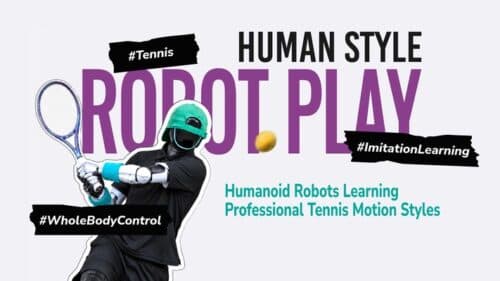
IEEE Spectrum published a white paper on October 12, 2026, targeting roboticists and control engineers, describing a framework that decouples motion planning from motion tracking in humanoid robots performing ball sports. The paper argues that adaptive, speed-aware control is necessary to reduce the gap between simulated training and real-world deployment.
The core technical challenge the paper addresses is preserving a professional athlete's movement style while maintaining reliable task performance, two goals the authors treat as currently in tension in humanoid ball-sports robotics.
Analysis
370 wordsOn October 12, 2026, IEEE Spectrum published a white paper aimed at roboticists and control engineers, outlining a framework for humanoid robots performing ball sports. The central technical proposal is to decouple motion planning from motion tracking, meaning the system responsible for deciding what movements to make operates separately from the system responsible for executing them. The paper also identifies adaptive, speed-aware control as a necessary ingredient for closing the gap between how robots perform in simulation and how they behave when deployed in the physical world.
The paper surfaces a tension that sits at the heart of humanoid sports robotics: preserving the movement style of a professional athlete while simultaneously ensuring the robot completes its task reliably. These two objectives pull against each other because stylistic fidelity can introduce variability that undermines consistency, while rigid task-focused control tends to flatten out the nuanced dynamics that make athletic movement efficient and natural. The decoupling approach the authors propose is an attempt to manage both demands in parallel rather than forcing a trade-off, though the paper itself acknowledges that combining the two goals remains an open challenge rather than a solved problem.
No reactions from the Pro-AI, Anti-AI, or Middle Ground camps have appeared in response to this paper yet. Typically, the Pro-AI camp would highlight the framework as evidence that humanoid robots are closing in on human-level physical capability, pointing to the simulation-to-reality gap narrowing as a concrete milestone. The Anti-AI camp would likely question whether replicating athletic style in a robot serves any meaningful purpose, and raise concerns about the resources and institutional attention devoted to humanoid performance when practical robotics applications remain unresolved. The Middle Ground camp would probably focus on the engineering specifics, treating the decoupling architecture as a reasonable incremental contribution while noting that the gap between a white paper framework and a robot that can actually compete remains substantial.
The argument this paper opens will start to settle when research groups attempt to implement the proposed framework on physical hardware and publish performance benchmarks comparing stylistic accuracy against task success rates across varying conditions. Any follow-up from the same authors demonstrating real-world trials rather than simulation results would be the clearest signal to watch for.
Add your take
0 reader votesSign in with Google to pick a side and post. Your vote moves the story's Doom / Boom score.