
GPT-6 Astra completes real-car driving test as Grok and Claude fail
 6 sources · Crypto Briefing · Wired AI · WIRED
- Boom: GPT-6 Astra was the only model to successfully complete a real-world cone course driving test
- Doom: Grok failed the Toyota Corolla driving test conducted by three engineers
- Doom: Claude also did not finish the driving test successfully
- Neutral: GPT-6 Astra's performance still trails dedicated autonomous systems like Waymo, per outlets
- Neutral: The experiment used a real Toyota Corolla, not a simulator, to evaluate the models
The story in full
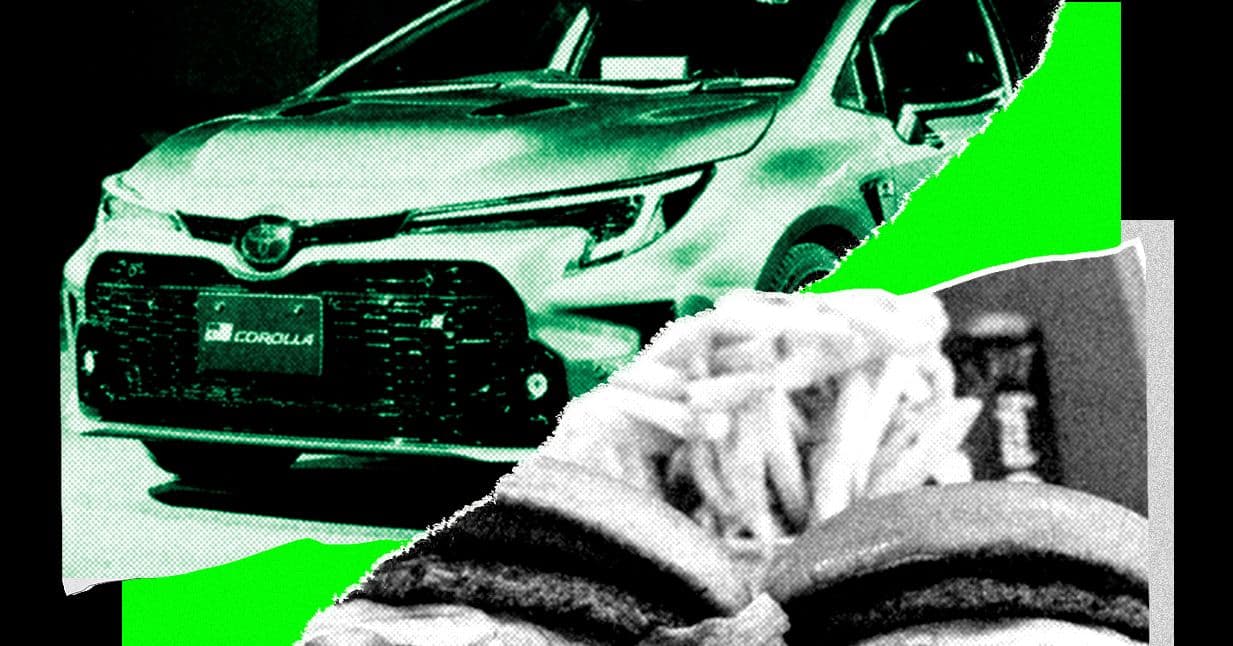
Researchers tested three AI models, GPT-6 Astra, Claude, and Grok, by placing them in control of a real Toyota Corolla, according to reports published between October 5 and 7, 2026. GPT-6 Astra was the only model to complete the driving task, which included navigating a cone course. Grok failed the test, and Claude also did not finish successfully. Three engineers conducted the experiment, according to Wired.
The test compared general-purpose large language models against each other in a physical driving context, rather than in simulation. GPT-6 Astra's completion of the course establishes a capability benchmark, though outlets note its performance still falls short of dedicated autonomous driving systems such as Waymo. No injuries, vehicle damage, or specific performance metrics were reported in the available sources.
Analysis
441 wordsBetween October 5 and 7, 2026, three engineers conducted an experiment in which they placed three general-purpose AI models, GPT-6 Astra, Claude, and Grok, in control of a real Toyota Corolla and asked each to navigate a cone course. GPT-6 Astra was the only model to complete the task. Grok failed outright, and Claude also did not finish successfully. The Wired report adds a notable detail about the destination that framed the exercise, suggesting the drive had a practical, if informal, goal. No injuries, vehicle damage, or specific timing and accuracy metrics appeared in the available reporting.
The significance of the test lies in its setting: a physical road environment rather than a simulator, which raises the stakes considerably for evaluating what a general-purpose language model can and cannot do when connected to real hardware. General-purpose models were not designed primarily for vehicle control, so any successful navigation of a physical course represents a meaningful capability marker. At the same time, outlets were quick to note that GPT-6 Astra's performance still falls short of dedicated autonomous driving systems like Waymo, which have accumulated millions of real-world miles under specialized development programs. The genuine dispute here is whether a result like this signals that general-purpose AI is converging on specialized systems, or whether the gap between completing a cone course and operating safely in traffic remains so large as to make the comparison premature.
None of the three camps, Pro-AI, Anti-AI, or Middle Ground, had published reactions to this story at the time of writing. Pro-AI voices would typically treat GPT-6 Astra's success as evidence that general-purpose models are developing physical-world competence faster than skeptics expected, and would likely point to the failure of competitors as a sign that OpenAI is pulling ahead. Anti-AI voices would typically focus on what the test does not prove, arguing that a controlled cone course is far removed from the unpredictability of public roads, and that framing this as a driving capability risks encouraging premature deployment. Middle Ground observers would likely acknowledge the result as a genuine incremental step while insisting that the Waymo comparison is the more relevant frame, and that purpose-built systems with extensive safety validation still set the appropriate standard.
The clearest thing to watch next is whether any of the three teams, or independent researchers, attempt a more rigorous follow-up with documented metrics such as completion time, cone strikes, and speed, or whether the experiment is replicated in open traffic conditions rather than a controlled course. A formal technical writeup from the engineers involved would also clarify how the models were interfaced with the vehicle, which is currently absent from the reporting.
What Anti-AI voices are sayingAlarm voices argue AI is being forced on the public by billionaires protecting their investments rather than driven by genuine usefulness or safety. A minority view focuses on environmental costs and calls for stopping generative AI use entirely.
Quote 1 of 4Add your take
0 reader votesSign in with Google to pick a side and post. Your vote moves the story's Doom / Boom score.
No more Pro-AI reactions
More Anti-AI reactions (5)
“AI being crammed down our throats because TechBillionaires invested billions in AI & funding Trump coup & scared to death AI will fail & will take them down financially.”
🌊🌊TsalagiWarrior🌊🌊, Bluesky · 17:30 UTC“STOP using generative AI. SAVE the planet instead.”
The Liberal BoJack, Bluesky · 17:14 UTC“STOP using generative AI. SAVE the planet instead.”
The Liberal BoJack, Bluesky · 17:15 UTC“AI being crammed down our throats because TechBillionaires invested billions in AI & funding Trump coup & scared to death AI will fail & will take them down financially.”
🌊🌊TsalagiWarrior🌊🌊, Bluesky · 17:29 UTC“Looking forward to Claude, Grok being criminally charged for giving medical advice without a license”
Jesse Ellis, Bluesky · 15:41 UTC
No more Middle Ground reactions
Sources
6 articles from 6 outlets- Crypto BriefingOpenAI's GPT-6 Astra is the only AI model to finish a real-world driving test in a Toyota Corolla
- Wired AIThese Researchers Made AI Drive a Toyota Corolla to Get In-N-Out
- WIREDThese Researchers Made AI Drive a Toyota Corolla to Get In-N-Out
- Gadget ReviewGPT-6 Astra Drove a Real Car Around a Cone Course: Grok Failed
- AUTO Connected Car NewsGPT-6 is a Better Driver than Grok & Claude But Still Ain’t Waymo
- The DriveResearchers Discover ChatGPT Can Drive a Car. Grok, on the Other Hand…
Related Splits
All stories →
OpenAI publishes hundreds of AI-generated solutions to unsolved math problems
OpenAI published a large collection of AI-generated solutions to previously unsolved mathematics problems on October 7, 2026. Outlet reporting puts the count at either 377 unsolved...

Startup launches platform where AI agents review software tools
Louis, co-founder of Armature, a YC P26 company, posted to Hacker News on October 7, 2026 about Agent.reviews, a platform that allows AI agents to read...
OpenAI rolls out GPT-6 with interactive UI to all ChatGPT users
OpenAI began a global rollout of GPT-6 inside ChatGPT on October 7, 2026, alongside a feature called Intelligent UI. The update replaces primarily text-based responses with...