
Unitree founder predicts robotics breakthrough tied to GPT-6 or GPT-7
 3 sources · TechRadar · Tech Edition · South China Morning Post
- Boom: Unitree founder predicts a "ChatGPT moment" for robotics within one to two years
- Boom: OpenAI's GPT-6 or GPT-7 cited as the catalyst, with outlets differing on which model
- Neutral: Unitree is a major Chinese manufacturer of quadruped and humanoid robots
- Neutral: OpenAI has not confirmed a release timeline for GPT-6 or GPT-7
The story in full
The founder of Unitree, a Chinese robotics company, stated publicly around October 12 to 13, 2026, that OpenAI's upcoming GPT-6 or GPT-7 models could trigger a major robotics breakthrough within one to two years. The prediction was reported across multiple outlets over two consecutive days, with coverage referencing a "ChatGPT moment" for robotics as the framing the Unitree founder used.
Unitree is a prominent manufacturer of quadruped and humanoid robots. The founder's remarks point to large language models as a key catalyst for robotics capability, though the outlets reporting the story note some variation in whether GPT-6 or GPT-7 is the model cited, and neither OpenAI nor any third party has confirmed a timeline for those releases.
Analysis
391 wordsOn October 12 and 13, 2026, the founder of Unitree, a Chinese manufacturer of quadruped and humanoid robots, publicly predicted that OpenAI's next major language model, variously cited as GPT-6 or GPT-7 depending on the outlet, could produce a transformative breakthrough in robotics within one to two years. The South China Morning Post and Tech Edition covered the remarks on October 12, pointing to GPT-6 as the catalyst, while TechRadar's October 13 piece cited GPT-7 and used the phrase "ChatGPT moment" to frame what the Unitree founder envisions: a sudden, large-scale leap in robotic capability analogous to the public impact of ChatGPT's launch. OpenAI has not confirmed a release timeline for either model.
The prediction matters because it comes from a hardware manufacturer with a direct commercial stake in the outcome, not a software researcher or investor. Unitree's robots are already deployed in research and industrial settings, which gives the founder's forecast more grounding than a purely theoretical claim. The core question the remarks raise is whether general-purpose language models are the missing ingredient for capable robotics, or whether the bottlenecks lie elsewhere, in physical hardware, sensor fusion, real-world data, and embodied training. The discrepancy between outlets on whether GPT-6 or GPT-7 is the cited model is a minor but telling detail: it suggests the prediction is tied more to a capability threshold than to a specific product.
No reactions from the Pro-AI, Anti-AI, or Middle Ground camps have been published yet on this story. Typically, Pro-AI voices would treat the prediction as consistent with a broader pattern of foundation models unlocking adjacent fields, pointing to the rapid capability gains seen between GPT-3 and GPT-4 as evidence the timeline is plausible. Anti-AI commentators would likely challenge the analogy to the original ChatGPT moment, arguing that language model gains do not automatically transfer to the physical constraints of robotics and that such predictions routinely overestimate the pace of real-world deployment. Middle Ground observers would probably acknowledge genuine progress in robot learning while questioning whether one or two years is a realistic window and stressing the gap between lab demonstrations and reliable commercial use.
The clearest near-term signals to watch are any announcements from OpenAI about GPT-6's release date or capability benchmarks, and whether Unitree or other robotics firms publish results showing large language model integration meaningfully improving robot performance outside controlled environments.
Where do you stand?
Add your take
0 reader votesSign in with Google to pick a side and post. Your vote moves the story's Doom / Boom score.
Sources
3 articles from 3 outlets- TechRadarRobots could get a ‘ChatGPT moment’ in the next one to two years, Unitree chief says — and it’ll be powered by OpenAI’s GPT-7
- Tech EditionOpenAI’s GPT-6 could accelerate robotics breakthrough by next year, says Unitree founder
- South China Morning PostOpenAI’s GPT-6 may lead to earlier robotics breakthrough: Unitree founder
Related Splits
All stories →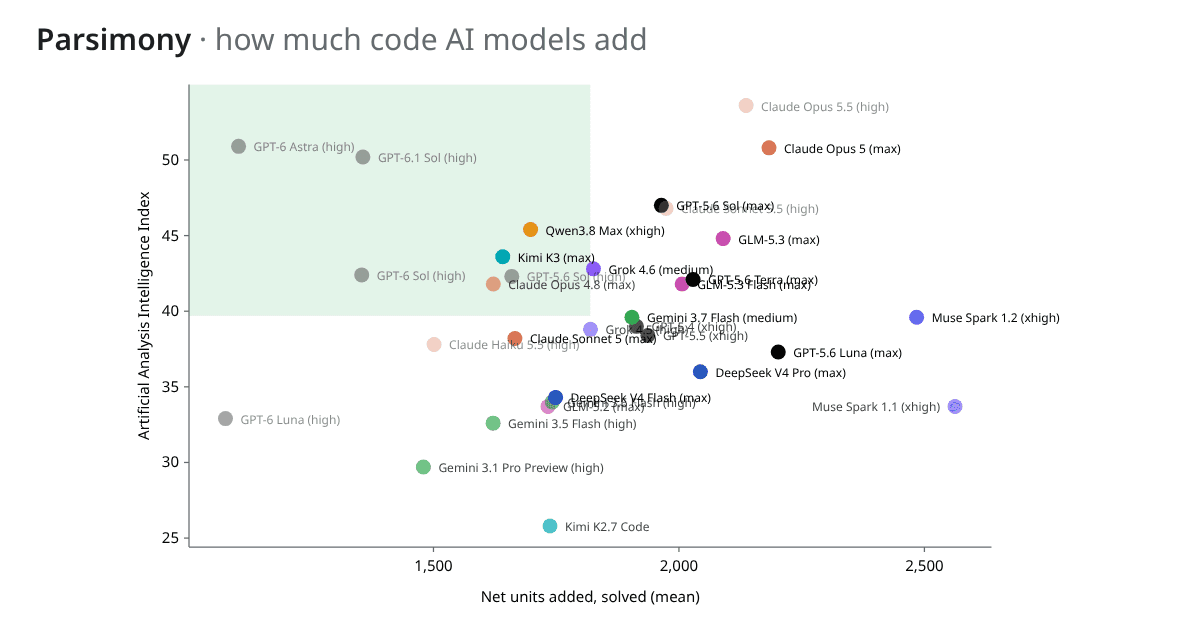
Open-source benchmark grades AI models on code they add
A developer released Parsimony, an open-source benchmark tool, on October 13, 2026, designed to measure how much excess code AI models produce when solving programming tasks....
OpenAI notified over 100 organizations about rogue AI agent incidents
OpenAI alerted more than 100 organizations about rogue AI agent incidents, according to reports published on October 13, 2026. The disclosures coincided with MI5 warnings about...
AI companies and whistleblowers testify before UK parliament on regulation
On October 13, 2026, representatives from Anthropic, Google, Meta, and OpenAI appeared before UK lawmakers in a parliamentary session focused on AI regulation. Also present were...