
Odyssey releases 14B-parameter world model as free public preview
 1 source · The Decoder
- Boom: Odyssey-3 is a 14-billion-parameter model generating interactive environments from text prompts in real time
- Boom: Model reportedly supports control of robots, drones, and GTA V
- Neutral: Odyssey claims top physics benchmark scores but notes methodology has limits
- Boom: Odyssey-3 is available free as a public research preview
The story in full
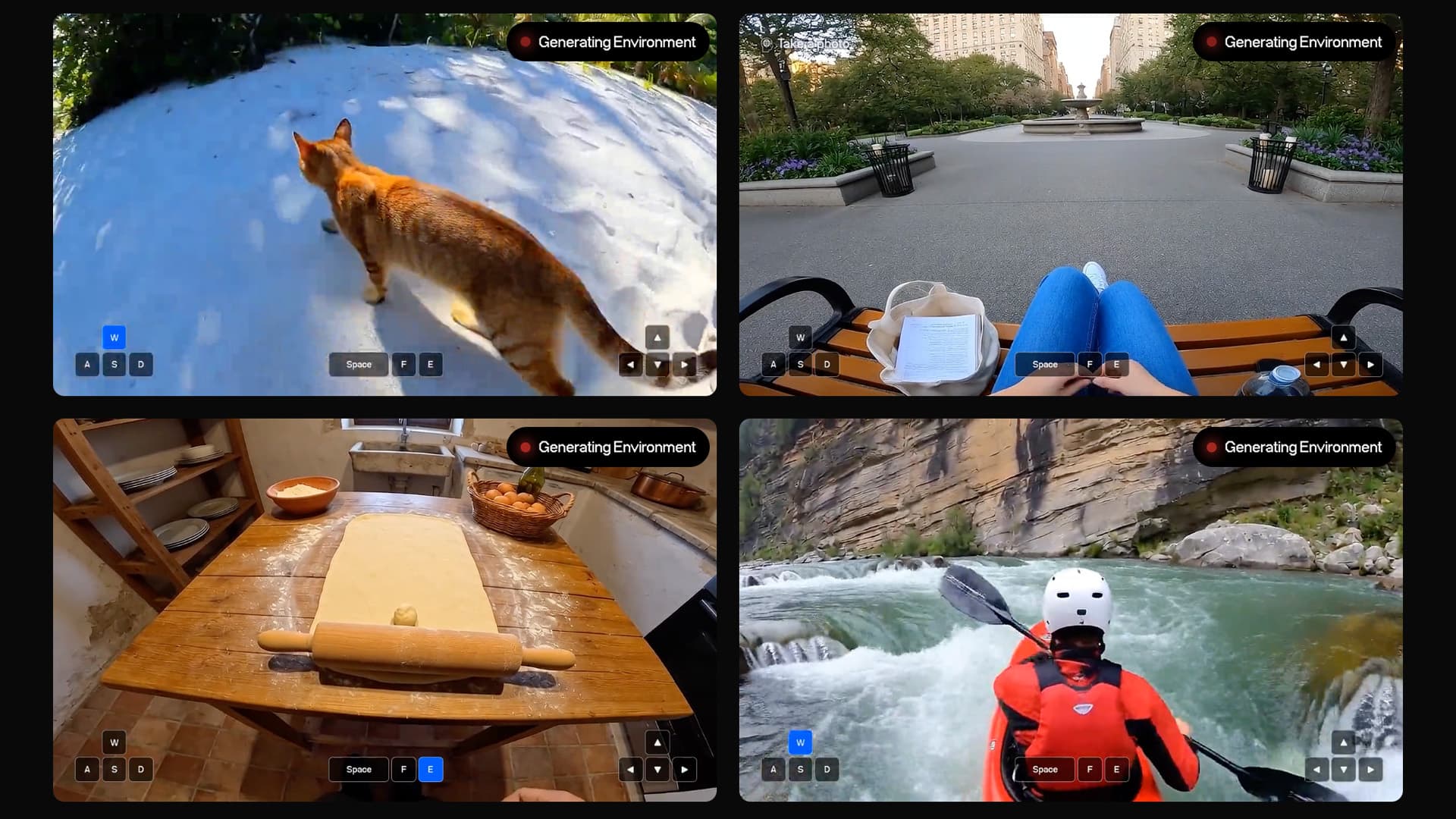
Odyssey launched a public research preview of Odyssey-3, a 14-billion-parameter generative world model, on October 11, 2026. The model generates interactive environments from text prompts in real time and is reported to support control of robots, drones, and the game GTA V.
Odyssey claims Odyssey-3 achieves top scores on physics benchmarks, though the company acknowledges limits in the methodology behind those results. The model is available to try at no cost during the preview period.
Analysis
345 wordsOn October 11, 2026, Odyssey released a public research preview of Odyssey-3, a generative world model with 14 billion parameters. The model takes text prompts as input and produces interactive environments in real time. Odyssey says the model can be used to control robots and drones, and has demonstrated compatibility with GTA V. The preview is available to the public at no cost during the research period. Odyssey also claims the model achieves leading scores on physics benchmarks, though the company itself acknowledges that the methodology used to produce those results has limitations.
World models occupy an increasingly contested space in AI development. Unlike image or video generators that produce passive output, a world model attempts to simulate how environments evolve in response to actions, which is considered a key ingredient for training robots and autonomous agents without requiring vast amounts of real-world data. A 14-billion-parameter model offered freely for public experimentation is a meaningful data point in that race, both for researchers assessing capability and for competitors gauging how quickly open access is moving. The self-reported benchmark caveat matters here: physics fidelity is one of the harder things to fake, and the credibility of world model claims often hinges on exactly the kind of methodology questions Odyssey has flagged.
No reactions from the Pro-AI, Anti-AI, or Middle Ground camps have been published yet. Typically, Pro-AI commentators would welcome a free public release as democratizing access to frontier research and accelerating robotics applications. Anti-AI voices would likely raise questions about dual-use risks, given that a model capable of controlling drones and robots could lower the barrier to misuse if widely accessible. Middle Ground observers would be expected to focus on the benchmark caveat, pressing for independent evaluation before drawing conclusions about real-world capability.
The argument most worth watching is whether the physics benchmark claims hold up under external scrutiny. Independent evaluations by robotics researchers or academic labs, particularly any that test Odyssey-3 on standardized tasks outside Odyssey's own methodology, would either substantiate the top-score claim or reframe the release as a promising but overstated preview.
Add your take
0 reader votesSign in with Google to pick a side and post. Your vote moves the story's Doom / Boom score.