
Nvidia publishes ROI framework for AI factory operators
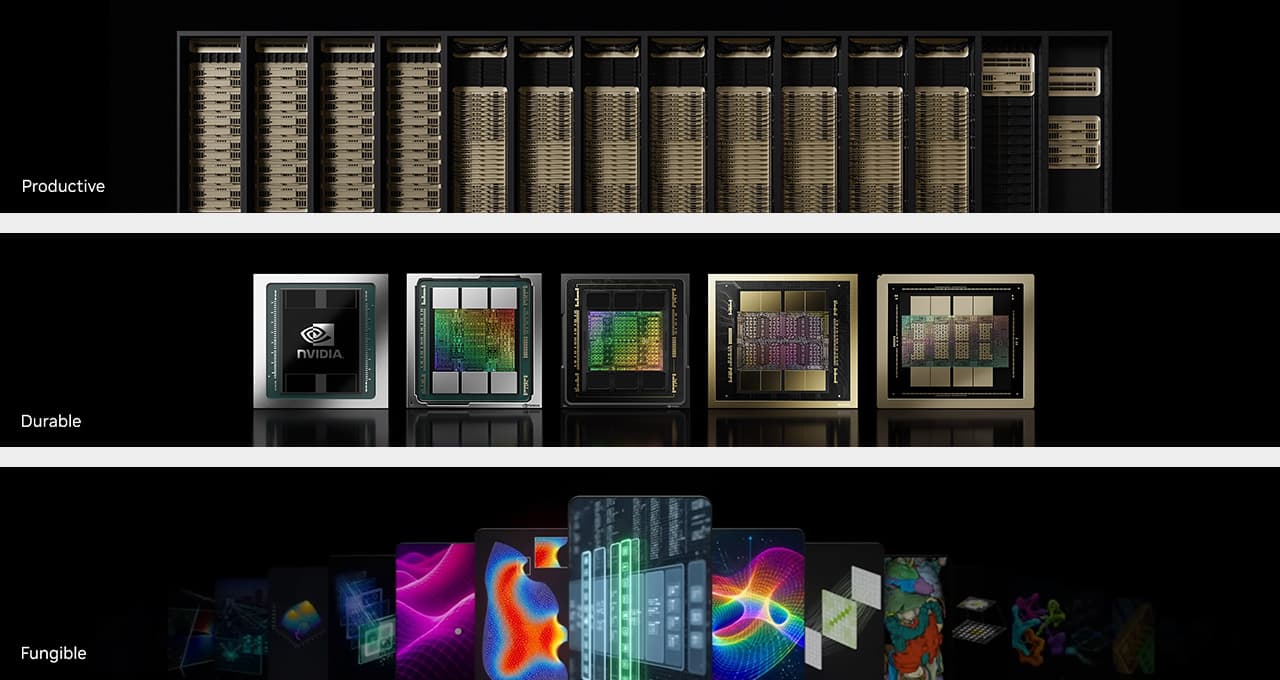 2 sources · NVIDIA Blog
- Neutral: Nvidia says each megawatt of AI factory capacity costs roughly $60 million
- Boom: AI factories are being built at megawatt to gigawatt scale, per Nvidia
- Boom: Nvidia identifies earning capacity, durability, and fungibility as the three ROI drivers
The story in full
Nvidia published a blog post on October 1, 2026, outlining how AI factories can maximize return on investment. The post states that each megawatt of AI factory capacity costs roughly $60 million to build, and that factories are constructed at megawatt to gigawatt scale. It identifies three factors shaping returns: earning capacity, durability, and fungibility.
The post is directed at AI factory operators who must justify capital commitments at that scale. No third-party figures, named customers, or disputed claims appear in the source material.
Analysis
402 wordsOn October 1, 2026, Nvidia published a blog post laying out a return-on-investment framework aimed at operators of what it calls AI factories, large-scale compute facilities designed to run AI workloads. The post states that each megawatt of AI factory capacity costs roughly $60 million to build, and that these facilities are being constructed at scales ranging from single megawatts up to a full gigawatt. Nvidia organizes its ROI argument around three factors: earning capacity, meaning what a factory can generate in revenue over a year; durability, meaning how long the asset holds its value; and fungibility, meaning how easily the infrastructure can shift between different workloads or customers.
The framework matters because it is directed at a specific and consequential audience: the infrastructure investors and hyperscale operators who must approve capital commitments in the tens or hundreds of millions of dollars before a single server is switched on. By publishing this framework publicly, Nvidia is effectively making the case that its hardware and platform are the right foundation for those commitments, embedding its own product logic inside what reads as neutral financial guidance. The numbers involved underscore the stakes: a one-gigawatt facility, at Nvidia's stated cost figure, would represent roughly $60 billion in capital expenditure, a sum that concentrates significant economic and strategic weight in a small number of decisions.
None of the three camps, Pro-AI, Anti-AI, or Middle Ground, have published reactions to this story yet. Pro-AI voices would typically welcome the framework as evidence that AI infrastructure is maturing into a disciplined asset class with legible financial metrics, lending the sector credibility with institutional capital. Anti-AI commentators would likely question whether Nvidia is the appropriate party to define ROI standards for an industry where it is also the dominant hardware vendor, raising concerns about conflicts of interest and whether the framework obscures risks like rapid hardware obsolescence. Middle Ground observers would probably focus on the fungibility and durability claims specifically, asking whether real-world infrastructure can live up to them as model architectures and competitive dynamics shift quickly.
The argument would sharpen if independent operators or financial analysts published their own assessments of the $60 million per megawatt figure and the three-factor model, either validating or contesting Nvidia's framing with data from running facilities. Any major capital commitment by a named customer citing this framework would also be a concrete test of how much weight the guidance carries in practice.
Where do you stand?
Add your take
0 reader votesSign in with Google to pick a side and post. Your vote moves the story's Doom / Boom score.
Sources
3 articles from 1 outletRelated Splits
All stories →
NVIDIA Vera CPU reaches Los Alamos and CoreWeave adds it to portfolio
An NVIDIA Vera CPU arrived at Los Alamos National Laboratory, according to reports dated September 30 and October 1, 2026. CoreWeave separately added the Vera CPU...
Nvidia launches Open Agent Safety Platform to contain rogue AI agents
Nvidia launched the Open Agent Safety Platform, an open-source hardware-and-software security stack designed to detect and quarantine rogue AI agents. According to Tom's Hardware, the system...

Nvidia opens applications for 2027–2028 graduate fellowship program
Nvidia has opened applications for its 2027–2028 Graduate Fellowship Program, offering awards of up to $60,000 to doctoral students conducting research relevant to Nvidia technologies. The...