
Google Cloud and NVIDIA launch Vera Rubin cloud instances
 3 sources · Securities.io · NVIDIA Blog
- Boom: A5X instances combining Vera Rubin NVL72 and ConnectX-9 SuperNICs announced for general availability
- Boom: Full availability launches next month, with planned expansion to European regions
- Boom: Platform targets training, inference, and large-scale reinforcement learning workloads
- Neutral: Google Cloud's fourth-generation advanced liquid-cooling technology integrated into the offering
The story in full
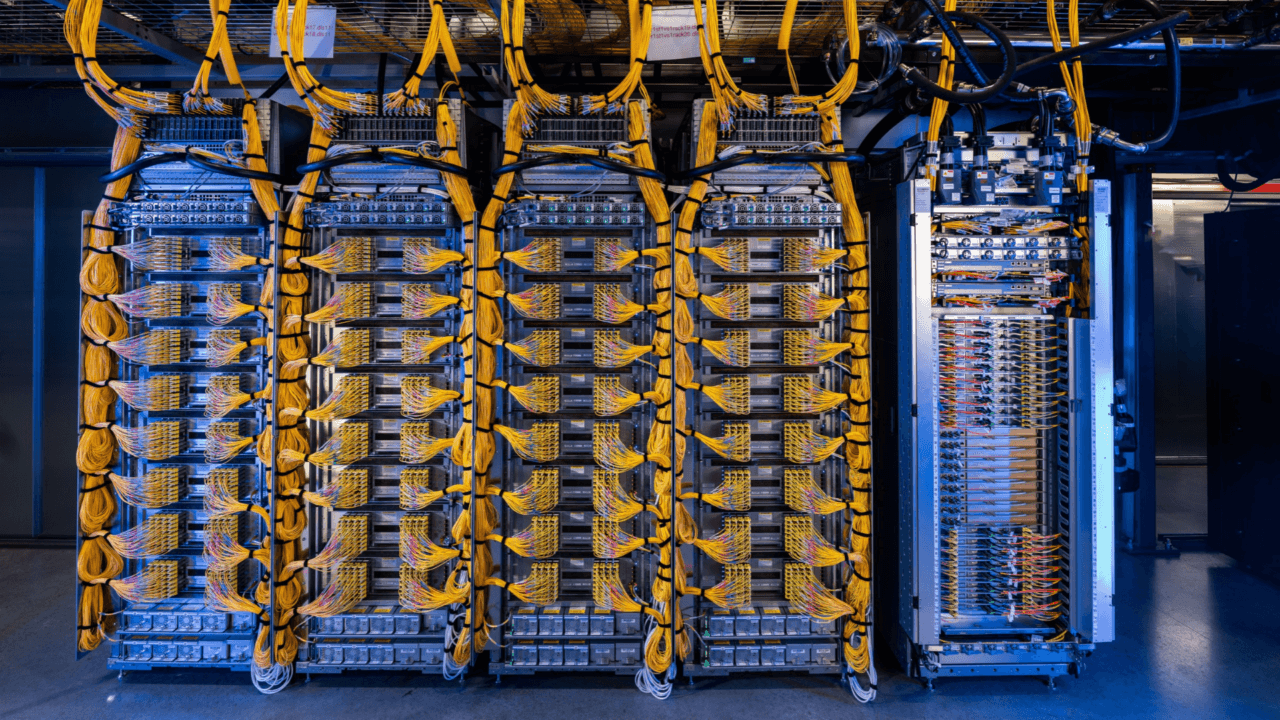
Google Cloud and NVIDIA announced on October 21, 2026 the general availability of NVIDIA Vera Rubin infrastructure on Google Cloud, branded as A5X instances. Full availability is set for the following month, with a planned expansion to Europe. The A5X instances combine NVIDIA Vera Rubin NVL72 hardware, NVIDIA ConnectX-9 SuperNICs, Google Cloud's Virgo Network, and Google Cloud's fourth-generation advanced liquid-cooling technology.
The platform is designed for training, inference, and large-scale reinforcement learning workloads. No disputes or opposing statements from the parties were included in the announcement.
Analysis
330 wordsOn October 21, 2026, Google Cloud and NVIDIA jointly announced the general availability of NVIDIA Vera Rubin infrastructure on Google Cloud, marketed under the name A5X instances. The hardware stack combines NVIDIA's Vera Rubin NVL72 units with NVIDIA ConnectX-9 SuperNICs, Google Cloud's Virgo Network fabric, and Google Cloud's fourth-generation advanced liquid-cooling technology. Full availability is scheduled for the following month, with a subsequent expansion planned for European regions. The announcement positions the platform explicitly for training, inference, and large-scale reinforcement learning workloads.
The significance here lies in the timing and the hardware generation involved. Vera Rubin is NVIDIA's successor architecture to Blackwell, meaning this announcement places next-generation accelerator capacity inside a major public cloud at the point of general availability, rather than as a research preview or limited pilot. The integration of ConnectX-9 SuperNICs and Google's own Virgo Network suggests the offering is engineered to reduce interconnect bottlenecks at the scale that frontier model training and reinforcement learning demand. The planned European expansion also signals an intent to serve customers operating under regional data and compliance requirements, which has historically limited access to cutting-edge compute in those markets.
No reactions from the Pro-AI, Anti-AI, or Middle Ground camps have been published on this story yet. Pro-AI voices would typically frame a launch like this as a meaningful expansion of access to frontier compute, accelerating research and commercial AI development for a broader range of organizations. Anti-AI commentators would be expected to raise concerns about concentrating powerful training infrastructure in a small number of corporate partnerships, and about the energy and resource demands of large-scale liquid-cooled GPU clusters. A middle-ground perspective would likely focus on who actually gains access at what cost, and whether general availability translates to meaningful availability for smaller or non-enterprise users.
The details most worth watching are the specific pricing and quota structures Google Cloud publishes when full availability opens next month, and whether the European expansion comes with a concrete timeline or remains an open commitment.
Where do you stand?
Add your take
0 reader votesSign in with Google to pick a side and post. Your vote moves the story's Doom / Boom score.
Sources
3 articles from 2 outletsRelated Splits
All stories →
Nvidia CEO addresses Europe's AI gap and data center tools
Nvidia's CEO spoke to Europe's AI sector on October 21, 2026, offering tools intended to speed up data center construction across the region. Four outlets reported...
Multiple vendors make AI announcements at NVIDIA GTC Berlin
At NVIDIA GTC Berlin on October 21, 2026, several companies made product announcements. Fleet announced it is bringing the full NVIDIA AI hardware suite under enterprise...
Supermicro, NVIDIA and Nokia team up on edge AI network solutions
Supermicro announced a collaboration with NVIDIA and Nokia on October 21, 2026, to bring NVIDIA Aerial RAN compute solutions to the network edge. The stated goal...