
Goldman Sachs projects $1.2 trillion Big Tech AI spend by 2027
 2 sources · The Decoder
- Boom: Goldman Sachs projects five Big Tech firms will spend $1.2 trillion on AI infrastructure in 2027
- Boom: Projected spend is more than 50 percent above 2025 levels and exceeds prior Wall Street estimates
- Neutral: Goldman compares the investment cycle in GDP terms to 19th-century railroad construction
- Doom: Power supply, labor shortages, and memory chip constraints identified as bottlenecks that could slow buildout
The story in full
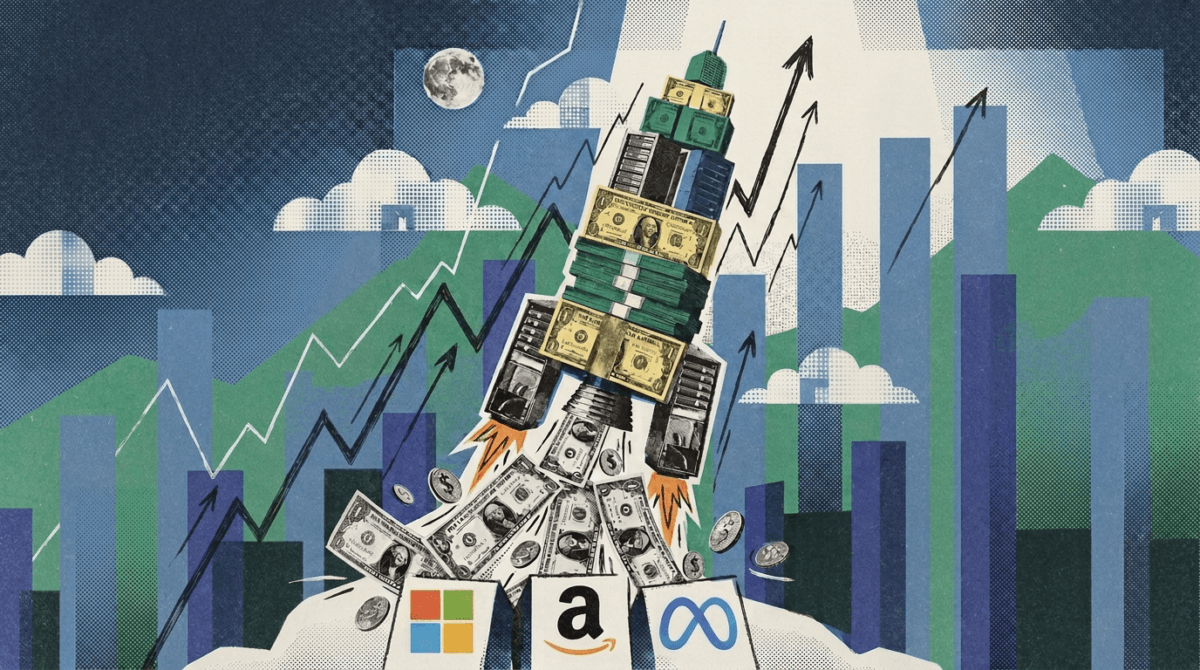
Goldman Sachs published a projection that Amazon, Alphabet, Microsoft, Oracle, and Meta will collectively spend $1.2 trillion on AI infrastructure in 2027, a figure more than 50 percent above 2025 spending levels and well above prior Wall Street estimates. The bank described the scale as the largest investment cycle relative to GDP since 19th-century railroad construction.
Goldman Sachs identified three potential bottlenecks that could slow the buildout: power supply, labor availability, and memory chip capacity. The projection covers capital expenditure by five named companies and does not include the broader industry.
Analysis
426 wordsGoldman Sachs published a projection in late September 2026 estimating that five major technology companies, Amazon, Alphabet, Microsoft, Oracle, and Meta, will collectively spend $1.2 trillion on AI infrastructure in 2027. That figure represents an increase of more than 50 percent above 2025 spending levels and sits well above what Wall Street had previously estimated. The bank framed the scale of the investment by comparing it, in GDP terms, to the railroad construction boom of the 19th century, one of the largest capital mobilizations in American economic history. Goldman also identified three structural bottlenecks that could constrain or delay the buildout: power supply, availability of skilled labor, and capacity in the memory chip market.
The projection matters for several reasons beyond the headline number. It covers only five companies, meaning the broader industry figure would be larger still. The comparison to railroad construction carries historical weight because that era produced both transformative infrastructure and a series of financial crashes driven by overbuilding and speculation. Whether AI infrastructure follows a similar arc is a genuinely open question, and the bottleneck warnings Goldman included suggest even the bank sees the path as uncertain. The gap between this projection and prior Wall Street estimates also raises questions about how quickly analyst consensus has shifted and whether the new figures are pricing in realistic returns.
Because no specific reactions from the Pro-AI, Anti-AI, or Middle Ground camps have been published in response to this story yet, their likely positions can only be sketched in general terms. The Pro-AI camp would typically treat a projection of this scale as validation that AI is entering a phase of industrial buildout comparable to past transformative technologies, pointing to the investment as evidence of genuine commercial confidence. The Anti-AI camp would likely focus on the bottlenecks Goldman named, arguing that constraints in power, labor, and chips reveal how fragile the expansion is, and might draw on the railroad analogy to warn of a speculative bubble. The Middle Ground camp would probably accept the investment as real while pressing on whether the returns justify the outlay and whether the bottlenecks will compress timelines or trigger a reallocation of capital.
The arguments on all sides will sharpen as the named companies release their capital expenditure disclosures through 2026 and into 2027. Quarterly earnings calls from Amazon, Alphabet, Microsoft, Oracle, and Meta will show whether actual spending tracks Goldman's projection, and any sign of slowdown tied to power constraints or chip shortages would become a concrete test of the bottleneck warnings the bank included in its analysis.
What Anti-AI voices are sayingThe alarm camp sees the spending scale as a sign that AI firms are in an unsustainable rush, with some calling for consumer boycotts of the companies involved.
Quote 1 of 2What Middle Ground voices are sayingThe middle camp notes that the companies driving this buildout are also among the largest corporate purchasers of clean energy, framing the infrastructure surge as more complex than a pure negative.
Top quoteAdd your take
0 reader votesSign in with Google to pick a side and post. Your vote moves the story's Doom / Boom score.
No more Pro-AI reactions
More Anti-AI reactions (1)
“DELETE Amazon, Prime, Google, Meta, Instagram, X apps. So done with these grifting selfish monsters, Enough already!”
seraphimsky.bsky.social, Bluesky · 04:33 UTC
No more Middle Ground reactions
Sources
2 articles from 1 outletRelated Splits
All stories →
AI researchers warn superintelligence extinction risk is around 50 percent
On September 29, 2026, Palisade Research, a non-profit focused on AI capabilities and motivations, published a series of interviews with roughly a dozen AI researchers on...

ElevenLabs releases Eleven v4 speech model with expressive voice features
ElevenLabs released its Eleven v4 speech model on September 29, 2025, adding improved accuracy for vocal cues such as laughter and whispering, along with better voice...

Google appeals EU orders to share search data and open Android
On September 29, 2026, Google filed legal challenges against two European Union regulatory orders. One order required Google to open Android's AI features, reported by one...