
Fields Medal winners split over AI use in mathematics research
 2 sources · The Decoder · BigGo Finance
- Boom: Shing-Tung Yau launches eight-institution alliance of over 1,000 scientists for AI math research
- Doom: 25 Fields Medal winners warn AI-generated proofs are harmful to mathematical practice
- Doom: Parts of the Western mathematics community are calling for a boycott of AI proofs
- Neutral: The dispute maps onto a geographic divide between Western caution and Chinese institutional adoption
The story in full
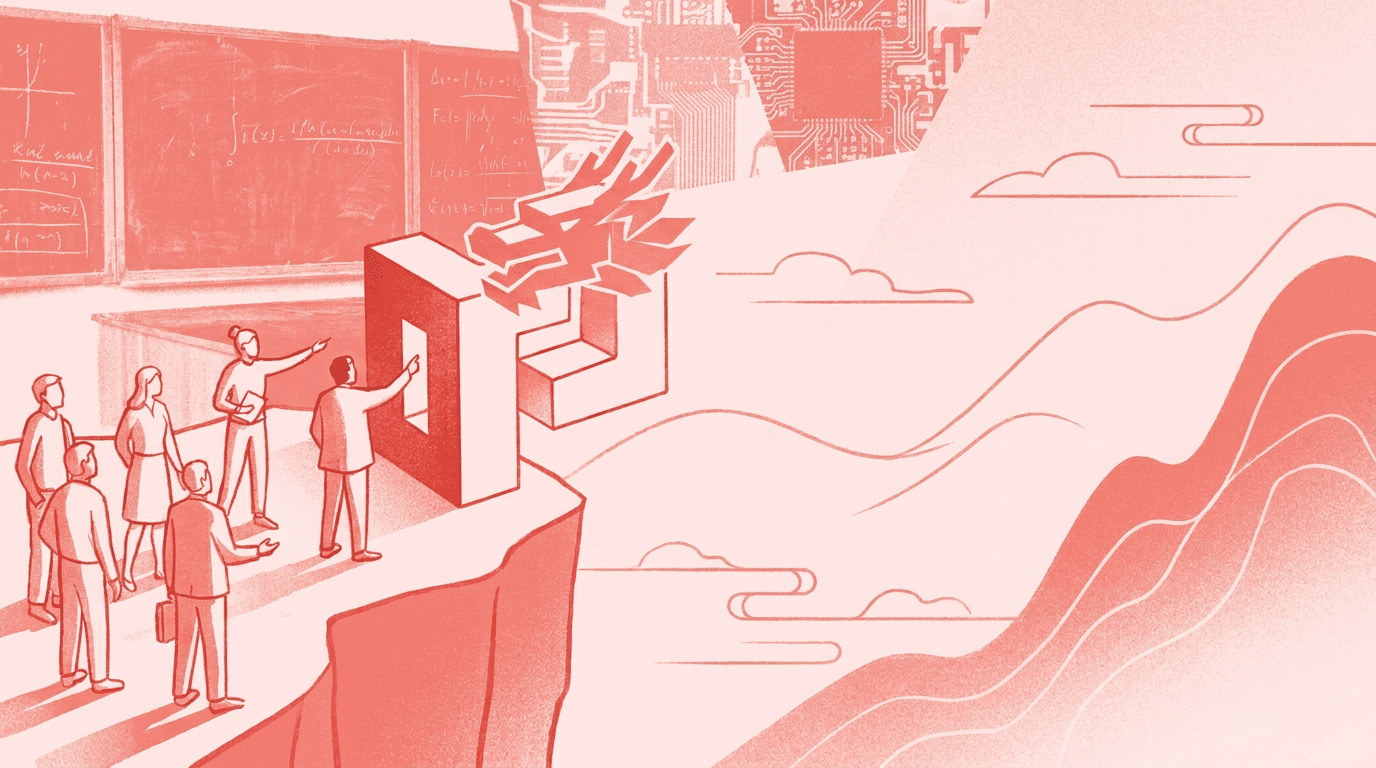
Twenty-five Fields Medal winners in the West have warned against AI-generated mathematical proofs, with some calling for a boycott, according to a report published on October 13, 2026. At the same time, Fields Medal winner Shing-Tung Yau has launched an alliance of eight institutions and over 1,000 scientists to integrate AI into mathematics research.
The split illustrates a broader disagreement about whether AI tools aid or degrade mathematical reasoning. Western critics argue AI-generated proofs make mathematicians less rigorous, while Yau's alliance is moving in the opposite direction, positioning AI as a research accelerator rather than a risk.
Analysis
382 wordsOn October 13, 2026, reports emerged of a sharp divide within elite mathematics over the use of AI in research. Twenty-five Fields Medal winners, predominantly based in the West, issued warnings against AI-generated proofs, with some going further and calling for an outright boycott of the practice. At the same time, Fields Medal winner Shing-Tung Yau announced the formation of a new alliance spanning eight institutions and enrolling more than 1,000 scientists, with an explicit mandate to accelerate the integration of AI into mathematical research.
The dispute matters because the Fields Medal is mathematics' highest honor, and when its recipients disagree this publicly, it signals a genuine fracture in professional norms rather than a routine academic debate. At stake is what counts as rigorous mathematical practice. Critics of AI-generated proofs argue that outsourcing verification and discovery to machine systems erodes the deep reasoning skills that mathematicians develop over careers. Supporters counter that AI tools can handle combinatorial or computational work at a scale no human team could match, freeing researchers for higher-order insight. The geographic pattern, Western caution versus Chinese institutional commitment, adds a geopolitical dimension that makes the disagreement harder to resolve on purely technical grounds.
None of the three camps have published specific reactions to this story yet. The pro-AI camp would typically argue that a 1,000-scientist alliance led by a Fields Medal winner represents exactly the kind of credible, expert-led adoption that legitimizes AI as a research tool, and that boycotts risk leaving Western mathematics at a competitive disadvantage. The anti-AI camp would be expected to treat the 25 Fields Medal signatories as authoritative voices confirming that AI threatens mathematical culture, and would likely frame Yau's alliance as a cautionary example of institutional momentum overriding scholarly judgment. A middle-ground position would probably acknowledge both the efficiency gains Yau's alliance is pursuing and the rigor concerns the Western signatories raise, calling for agreed standards around when and how AI-generated proofs can be used rather than a blanket embrace or rejection.
The argument is unlikely to resolve without a concrete trigger. Developments to watch include whether the boycott gains formal institutional backing at major Western mathematics bodies, whether Yau's alliance publishes peer-reviewed results credited partly to AI methods, and how journals respond to submissions that use or disclose AI-generated proof steps.
Where do you stand?
Add your take
0 reader votesSign in with Google to pick a side and post. Your vote moves the story's Doom / Boom score.
Sources
2 articles from 2 outletsRelated Splits
All stories →
Meta launches Muse Wonder and Muse Wonder Full AI models
Meta launched two AI models called Muse Wonder and Muse Wonder Full on or around October 13, 2026, positioning them as frontier-level systems intended to compete...
Nvidia's China AI chip share drops to 34% as Huawei gains
According to IDC data reported on October 13, 2026, Nvidia's share of China's AI chip market has fallen to 34%, with Huawei closing the gap. Multiple...
Tencent launches $5 billion bond sale to fund AI spending
Tencent kicked off a $5 billion offshore bond sale, telling investors the proceeds are earmarked mainly for AI capital expenditure. Reuters had earlier reported the figure...