
European cities adopt NVIDIA AI agents for urban operations
 3 sources · Unite.AI · NVIDIA Blog
- Boom: NVIDIA accelerated computing powers AI agents managing road repair and energy decisions in EMEA cities
- Boom: Digital twin technology is being applied to municipal operations across Europe, Middle East and Africa
- Neutral: Local software, infrastructure and integration partners are building and deploying the systems alongside NVIDIA
- Neutral: Announcement made October 14, 2026, with no specific city names or contract values disclosed
The story in full
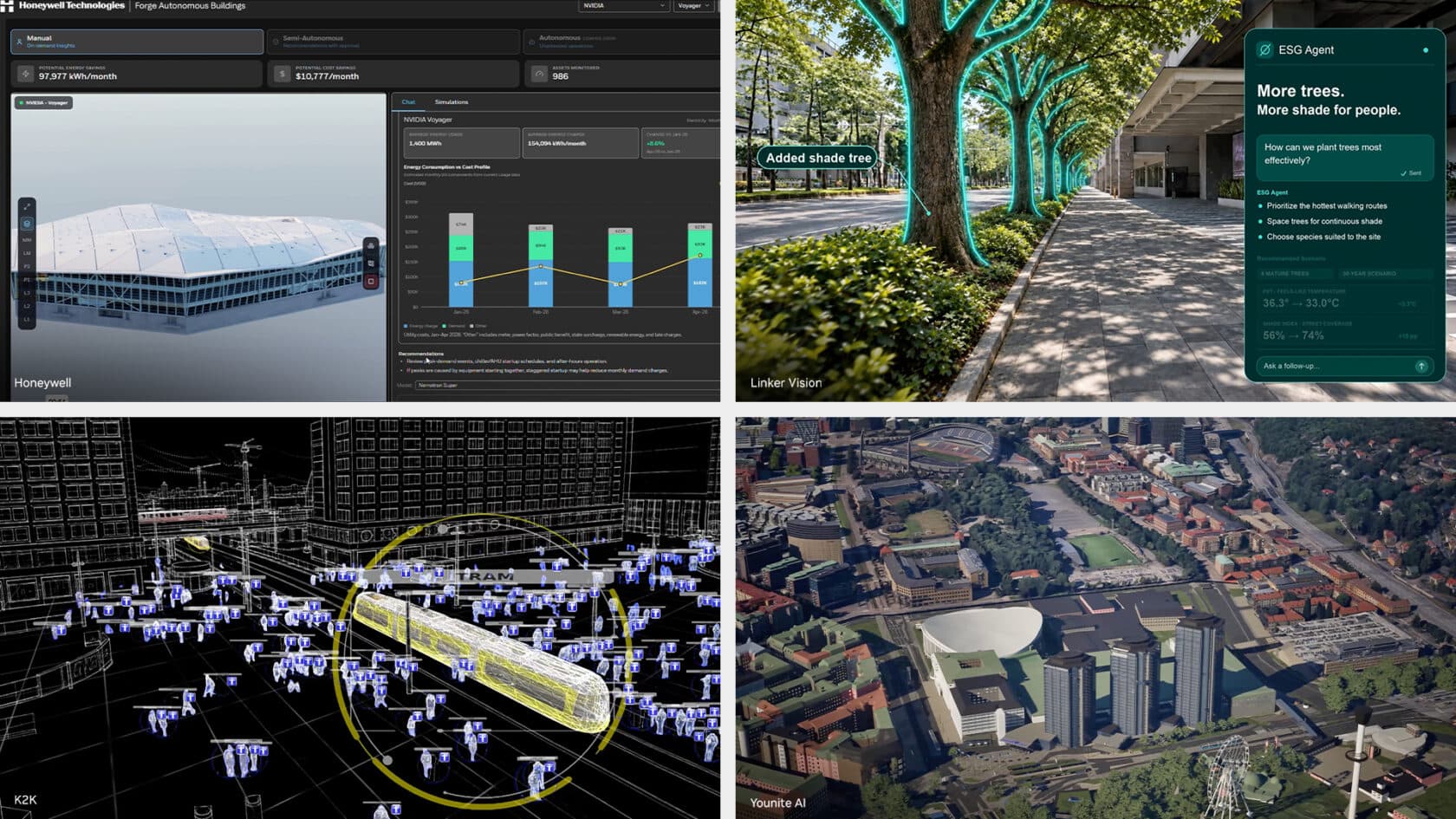
NVIDIA announced on October 14, 2026 that cities across the EMEA region are deploying its accelerated computing technology to build AI agents and digital twins for urban management. Local software, infrastructure, and integration partners are involved in the rollout, with use cases including road maintenance scheduling and energy efficiency.
The deployments represent a broadening of NVIDIA's physical AI and digital twin technology into municipal government operations across Europe, the Middle East, and Africa. No specific city names, contract values, or partner organizations are named in the available source material.
Analysis
354 wordsOn October 14, 2026, NVIDIA announced that cities across the EMEA region, covering Europe, the Middle East, and Africa, are deploying its accelerated computing technology to run AI agents and digital twins for municipal operations. The stated use cases include scheduling road repairs and improving energy efficiency. Local software, infrastructure, and integration partners are described as building and operating the systems alongside NVIDIA, though no specific city names, partner organizations, or contract values were disclosed in the announcement.
The significance of the rollout lies in what it represents structurally rather than in any single deployment. Municipal governments have historically been cautious adopters of emerging technology, constrained by procurement rules, public accountability, and the consequences of system failures on essential services. Embedding AI agents into decisions about road maintenance and energy use means algorithmic outputs are influencing resource allocation that directly affects residents. The absence of disclosed contract values and city names makes independent scrutiny difficult, which is itself a point of contention in debates about public-sector AI adoption. Whether the technology improves service delivery or introduces new layers of opacity into local governance is genuinely contested.
No reactions from the Pro-AI, Anti-AI, or Middle Ground camps had been published at the time of this report. The Pro-AI camp would typically highlight efficiency gains and the ability of AI agents to process complex, real-time urban data far faster than human teams, framing the deployments as a practical upgrade to city infrastructure. The Anti-AI camp would be expected to raise concerns about accountability, asking who is responsible when an algorithm delays a road repair or misallocates energy resources, and would likely press for transparency on which cities and vendors are involved. The Middle Ground camp would probably argue that the technology has real potential but that its value depends entirely on the governance frameworks cities put in place around it, including audit trails, override mechanisms, and public reporting.
The details most worth watching are whether any participating cities publicly identify themselves, what procurement or transparency disclosures follow under European public-sector regulations, and whether any independent assessments of the systems' performance emerge in the months after deployment.
Where do you stand?
Add your take
0 reader votesSign in with Google to pick a side and post. Your vote moves the story's Doom / Boom score.
Sources
3 articles from 2 outletsRelated Splits
All stories →
NVIDIA pledges $250 million for UK agentic safety research
NVIDIA announced a five-year, $250 million compute commitment to support agentic safety and security research in the United Kingdom, disclosed on October 14, 2026. The pledge...

Liqid adds former Nvidia executive Kevin Connors to its board
On October 13, 2026, Liqid announced the appointment of Kevin Connors, a former Nvidia executive, to its board of directors. The announcement was carried by Business...
Nvidia releases faster DLSS Frame Generation Preset C for RTX GPUs
Nvidia released a new beta mode called Preset C for DLSS Frame Generation on October 13, 2026, targeting RTX 40 and 50 series GPUs. The lighter...