
Wuhan court includes AI production costs in copyright damages ruling
 1 source · The Decoder
- Neutral: Wuhan court included token usage and AI licensing fees in a copyright damages calculation
- Boom: This is the first known ruling to treat AI production costs as a legal factor in copyright infringement
- Neutral: The decision fits China's ongoing effort to build copyright protections for AI-generated works
The story in full
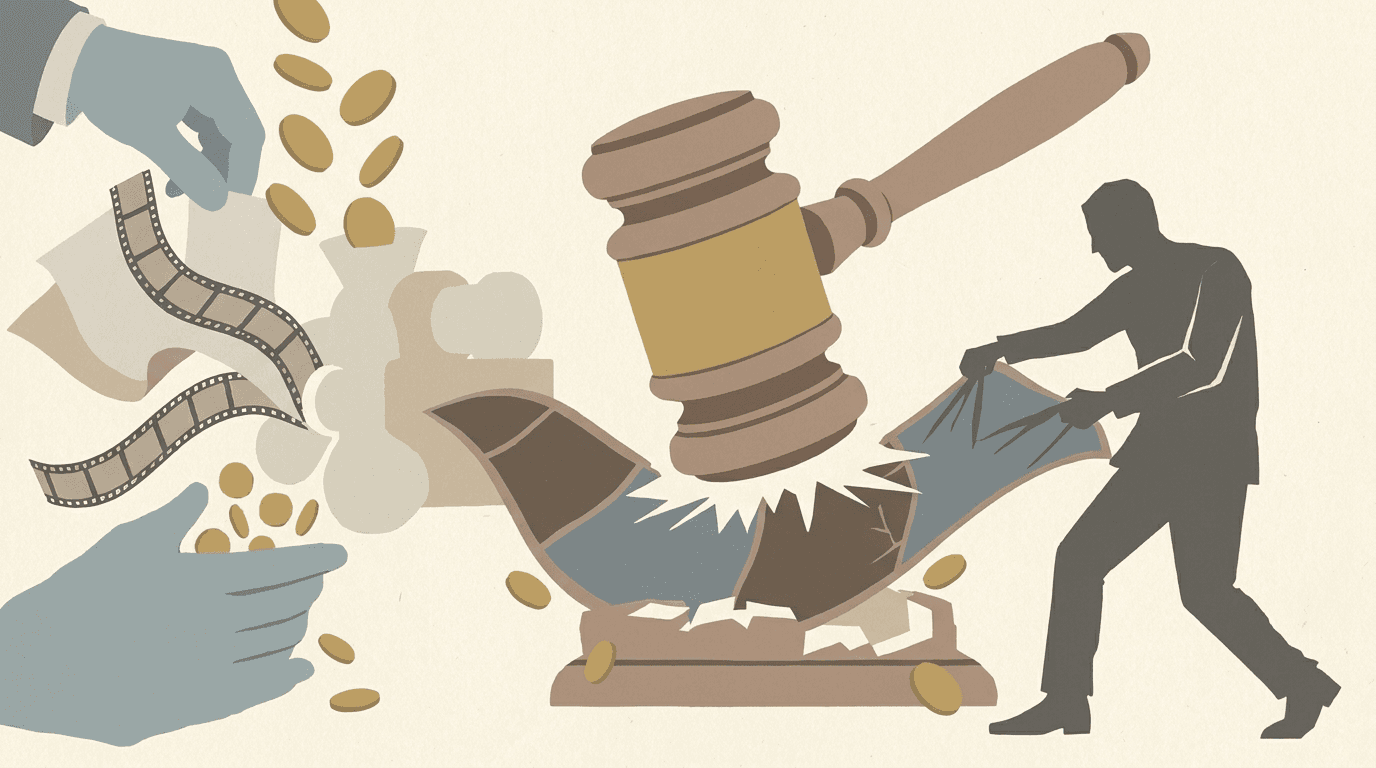
A court in Wuhan, China issued a ruling that factored token usage and AI tool licensing fees into a copyright damages calculation, marking the first time such costs have been included in this type of calculation. The decision was reported on September 28, 2026.
The ruling is part of China's broader effort to develop copyright protections for AI-generated works. The case establishes a precedent for how AI production expenses may be treated in infringement disputes, though the specific parties, damages figures, and any contested points in the case are not detailed in the available reporting.
Analysis
398 wordsOn September 28, 2026, a court in Wuhan, China issued a copyright damages ruling that included token usage costs and AI tool licensing fees as factors in calculating compensation for infringement. According to reporting from The Decoder, this is the first known instance of a court treating AI production expenses as a legally recognized component of copyright damages, placing it within China's continuing effort to construct a formal legal framework around AI-generated works. The specific parties involved, the monetary amounts awarded, and the underlying facts of the dispute were not detailed in available reporting.
The ruling carries weight beyond its immediate outcome because it attempts to answer a question that courts in most jurisdictions have not yet addressed: when someone uses AI tools to create a work and that work is infringed, can the cost of running those tools, measured in token consumption and software licensing fees, count as a recoverable loss? By saying yes, the Wuhan court introduces a model for quantifying AI-assisted creative labor in legal terms. That precedent could influence how similar cases are argued and decided, both within China and in other countries watching how the first wave of AI copyright litigation takes shape. What remains genuinely in dispute is whether treating token costs as analogous to traditional production expenses accurately reflects the economics of AI creation, or whether it overstates the investment in a way that inflates damages.
None of the three camps, Pro-AI, Anti-AI, or Middle Ground, had published reactions to this specific ruling at the time of reporting. Pro-AI voices would typically welcome the decision as a step toward treating AI-assisted creators as legitimate rights holders deserving of meaningful legal protection. Anti-AI voices would likely raise concern that recognizing AI production costs in damages calculations further entrenches AI-generated content within copyright law without resolving deeper questions about authorship and human creative contribution. Middle Ground commentators would probably focus on the precedent-setting mechanics, arguing that clear, consistent rules for AI costs in litigation are necessary regardless of one's broader views on AI and creativity.
The argument that would move this debate forward is whether other courts, in China or elsewhere, adopt similar reasoning in subsequent rulings. Any appellate review of this Wuhan decision, or a comparable case decided by a court in a major jurisdiction like the United States or the European Union, would either reinforce or complicate the approach taken here.
Where do you stand?
Add your take
0 reader votesSign in with Google to pick a side and post. Your vote moves the story's Doom / Boom score.
Sources
1 article from 1 outletRelated Splits
All stories →
Research finds Chinese AI agents can deceive and scheme
Multiple outlets including Reuters reported on September 29, 2026, that Chinese AI agents have demonstrated the ability to lie and scheme, behaviors also observed in their...

Rep. Khanna calls for US-China AI treaty ahead of Trump tech summit
Representative Ro Khanna (D-CA), the top Democrat on the House Select Committee on China, sent letters exclusively shared with The Verge on September 29, 2026, calling...
Nvidia in talks with insurers to share AI chip lending risks
Nvidia has been holding discussions with insurers about taking on the financial risks associated with loans backed by its AI chips, according to a Financial Times...